Hardness readings
Before and after numbers at your tap
When your softener quits, hard water starts wrecking fixtures within days. Our Water Softener Repair in Diamond Bar service covers everything from a water softener fix Diamond Bar homeowners call about at 7 a.m. to full control valve rebuilds. We test your water, diagnose the failure, and get soft water flowing again, usually the same day.
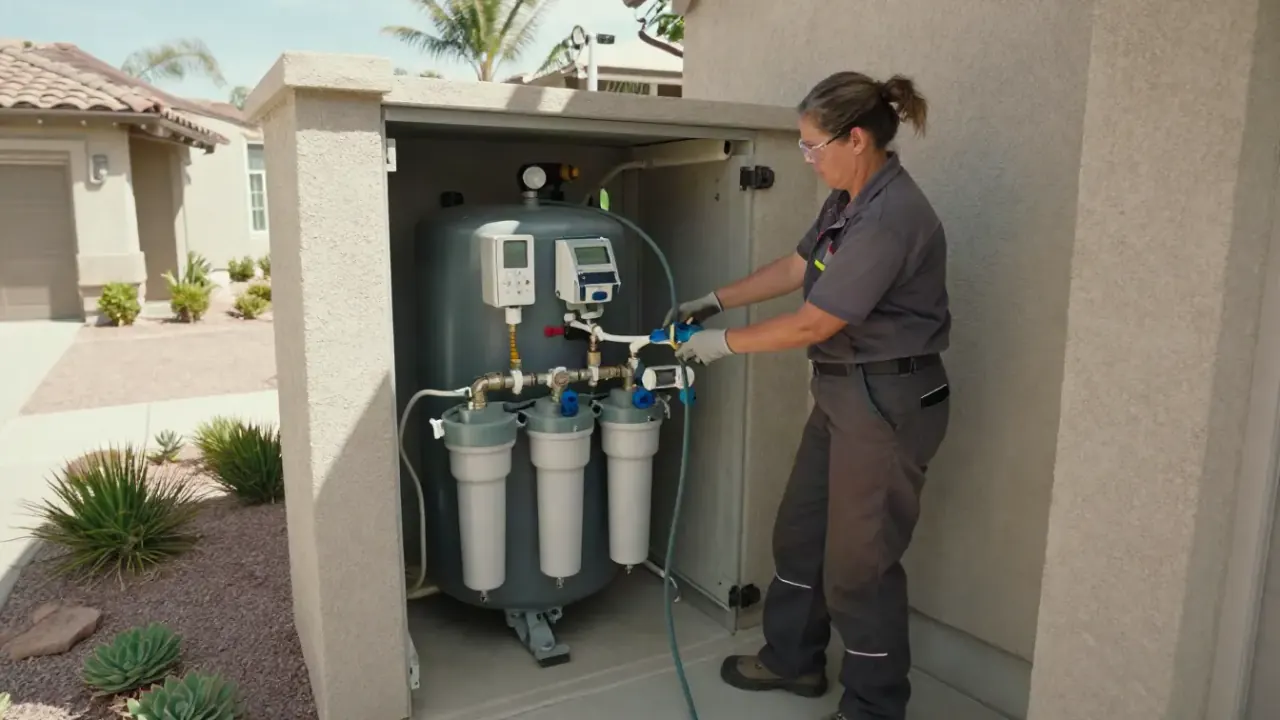
Every repair visit starts with diagnosis and ends with a verified fix. Here is what is covered in a standard call, and where we will quote separately if the job turns out bigger than expected.
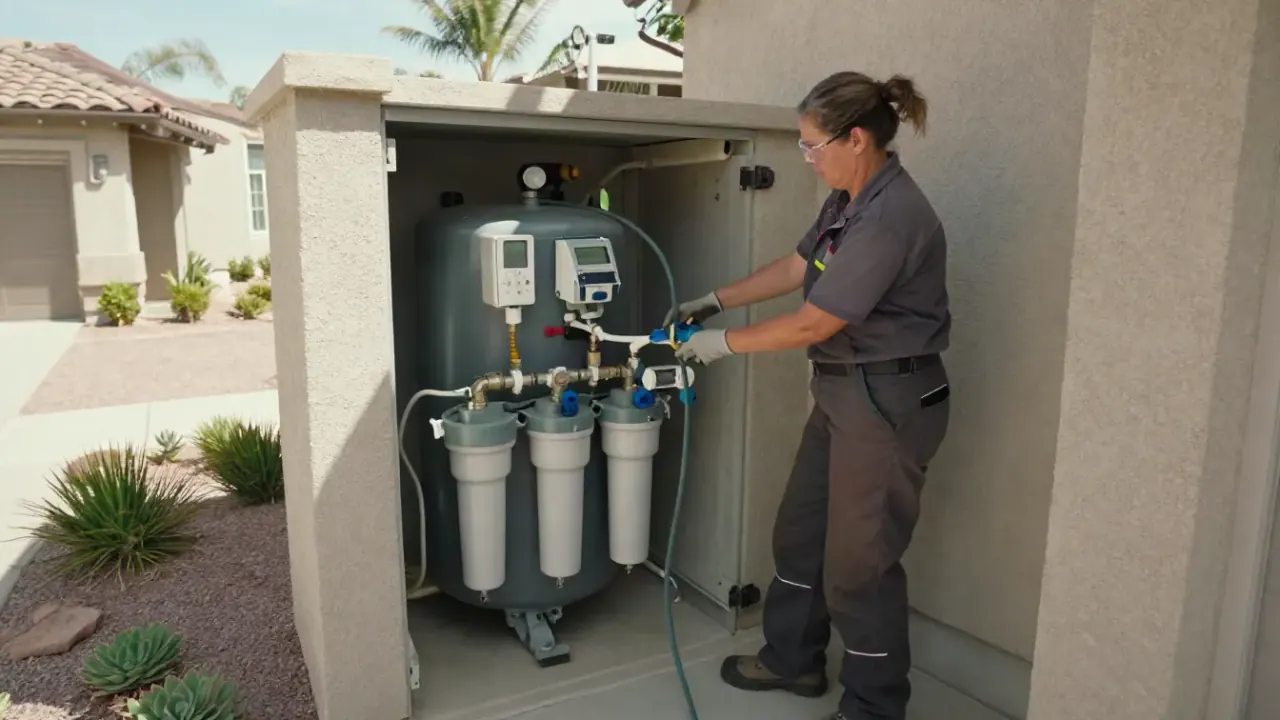
We repair home softeners so your dishes, fixtures, and water heater stop fighting hard water. You get the failed part replaced and the settings corrected for your household.
We keep softeners running in rental units, small offices, and multi-family buildings. You get documented repairs and hardness readings you can hand to owners or tenants.
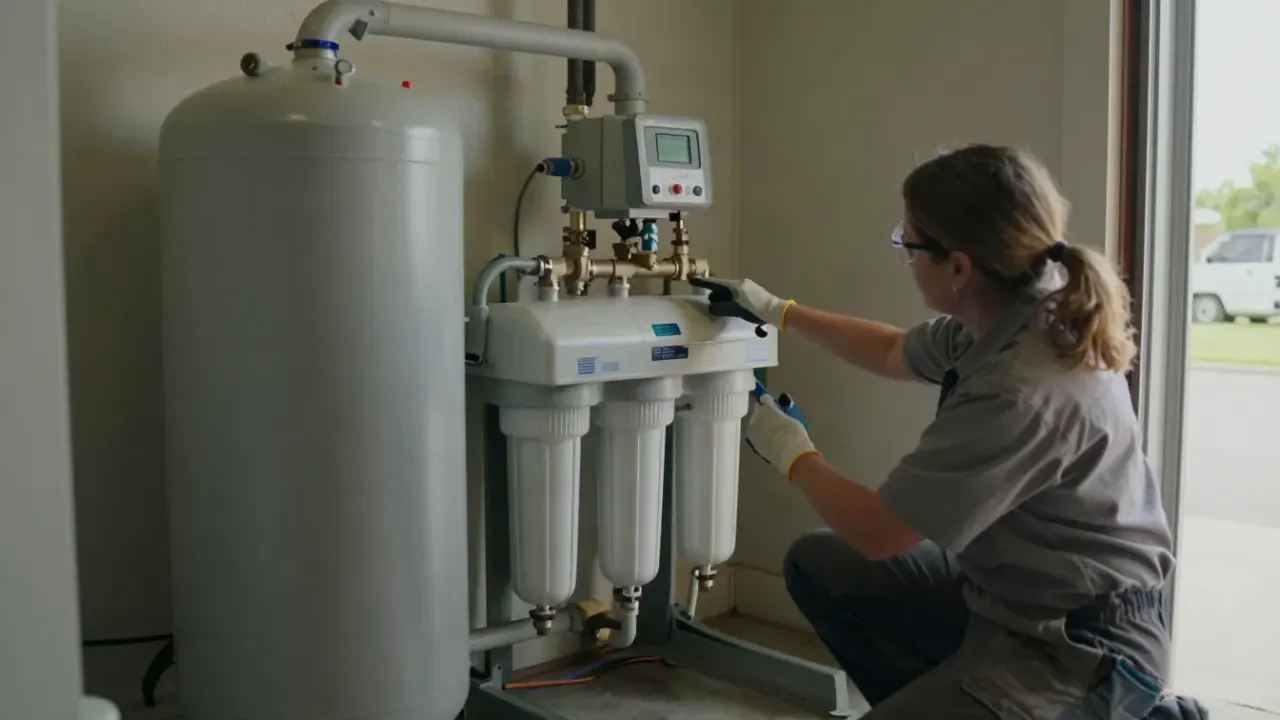
Water Softener Repair in Diamond Bar is the diagnostic and mechanical work that restores a failed softening system to full function, covering the control valve, resin tank, brine tank, and the plumbing connections between them. We start with a water hardness test kit and TDS meter reading at your tap, then open the control head to check the piston, seals, and motor. Most failures trace back to resin depletion, a stuck regeneration cycle, or a control valve that stopped indexing. We replace what failed, not the whole unit.
Diamond Bar sits on some of the hardest water in Los Angeles County, and that mineral load punishes softeners. Homes in Windwood and Diamond Point commonly see scale buildup in pipes within a few years if regeneration stops. When you search for a water softener repair near me, the usual trigger is spotting hard water spots on glass or hearing the unit run but never brining. We see that pattern weekly, and it is almost always fixable in one visit.
We test the water first, fix the failed part, and prove the repair with a hardness reading.
We keep the visit simple: find the fault, explain it in plain terms, fix it, and prove the unit works before we leave. Here is what you can expect from the first call to the final test.
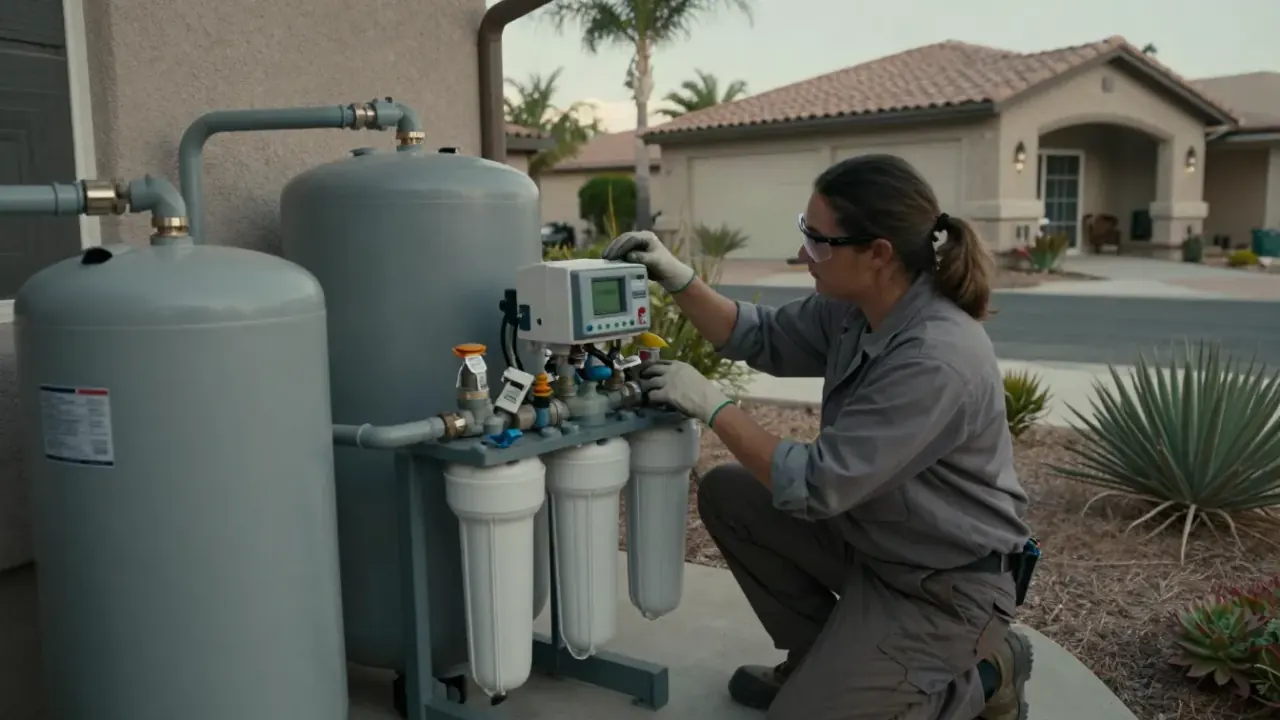
You describe the symptoms, we ask three or four questions about salt level, regeneration timing, and water feel. That conversation usually narrows the fault to the valve, the resin, or the brine line before we ever roll a truck. We schedule a two-hour arrival window and call ahead when we are on the way.
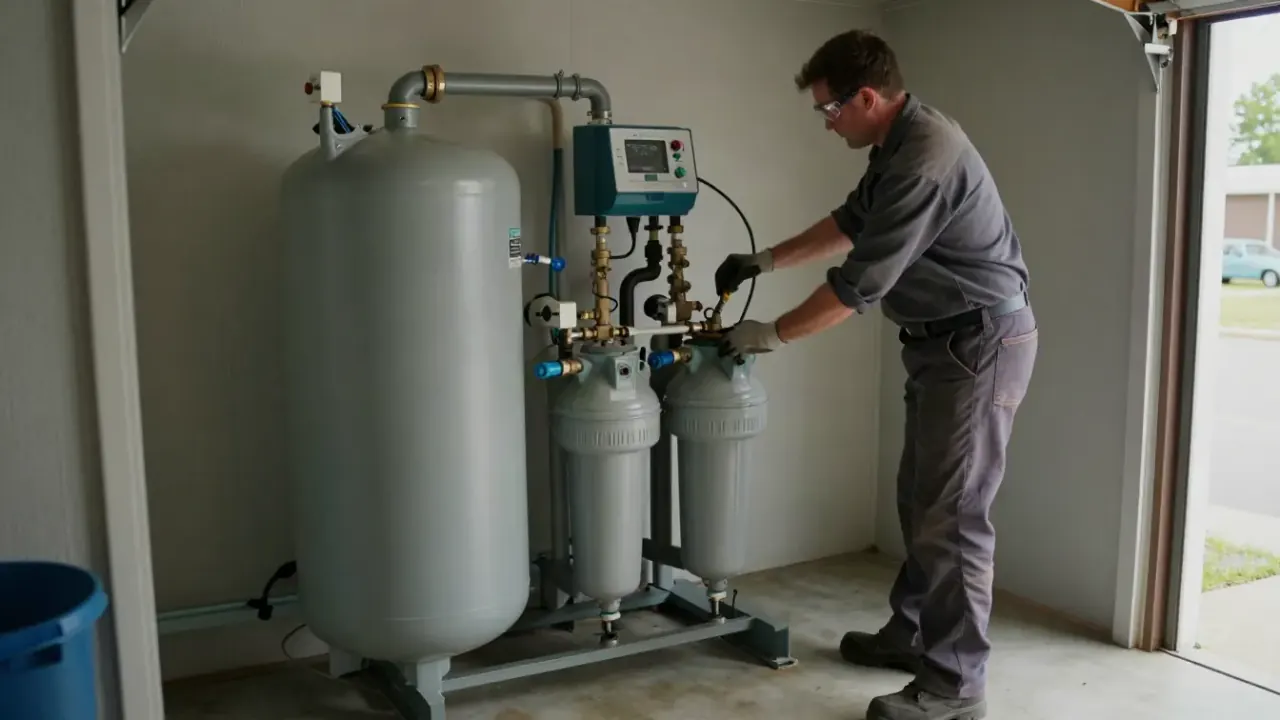
We test incoming hardness with a water hardness test kit and TDS meter, then manually cycle the control valve through each position. The brine tank gets checked for sludge and salt bridging, and we pull the resin tank lid if the softener is not regenerating. Diagnosis takes about 30 minutes.
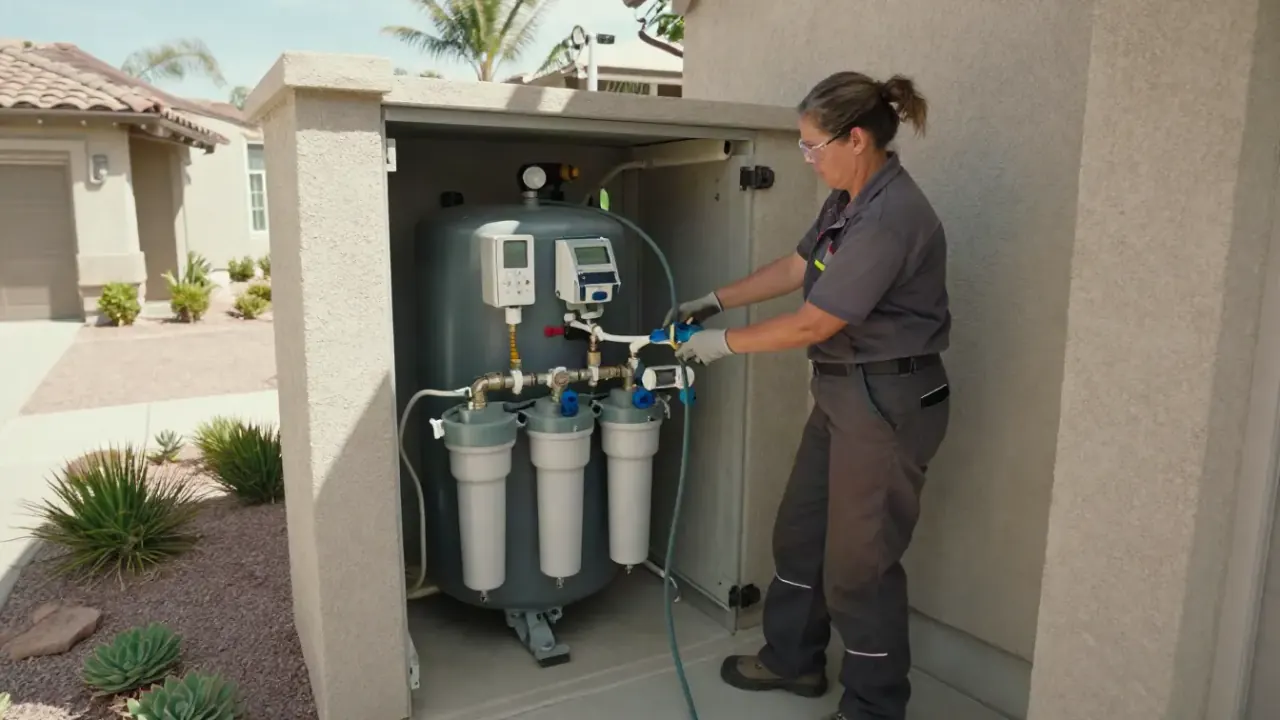
You get the repair price before we start, parts and labor together. No hourly surprise, no diagnostic fee stacked on top if you approve the work. If the fix is not worth it on an old unit, we say so and quote replacement instead.
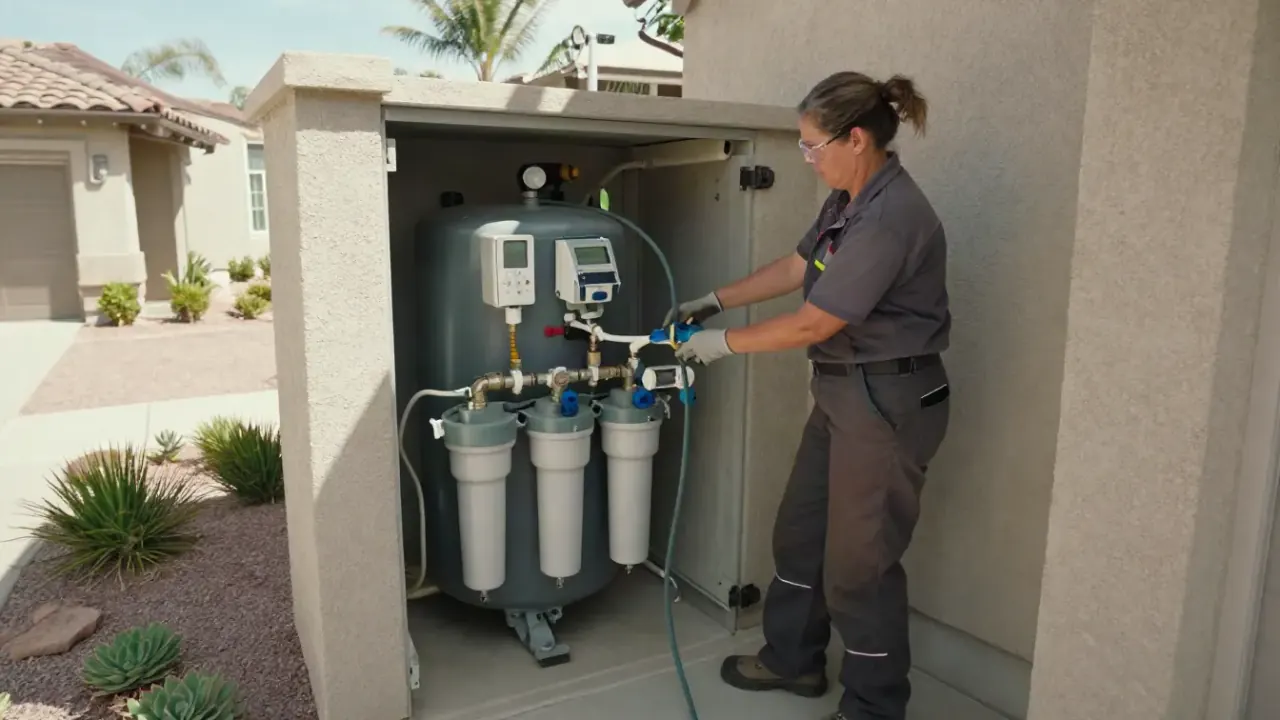
We isolate the unit with the bypass valve, drain pressure, and swap the failed parts. Control valve rebuilds take 60 to 90 minutes. Resin replacement runs closer to two hours because the tank has to be emptied, flushed, and refilled with fresh ion exchange resin. Everything gets leak-checked before reassembly.
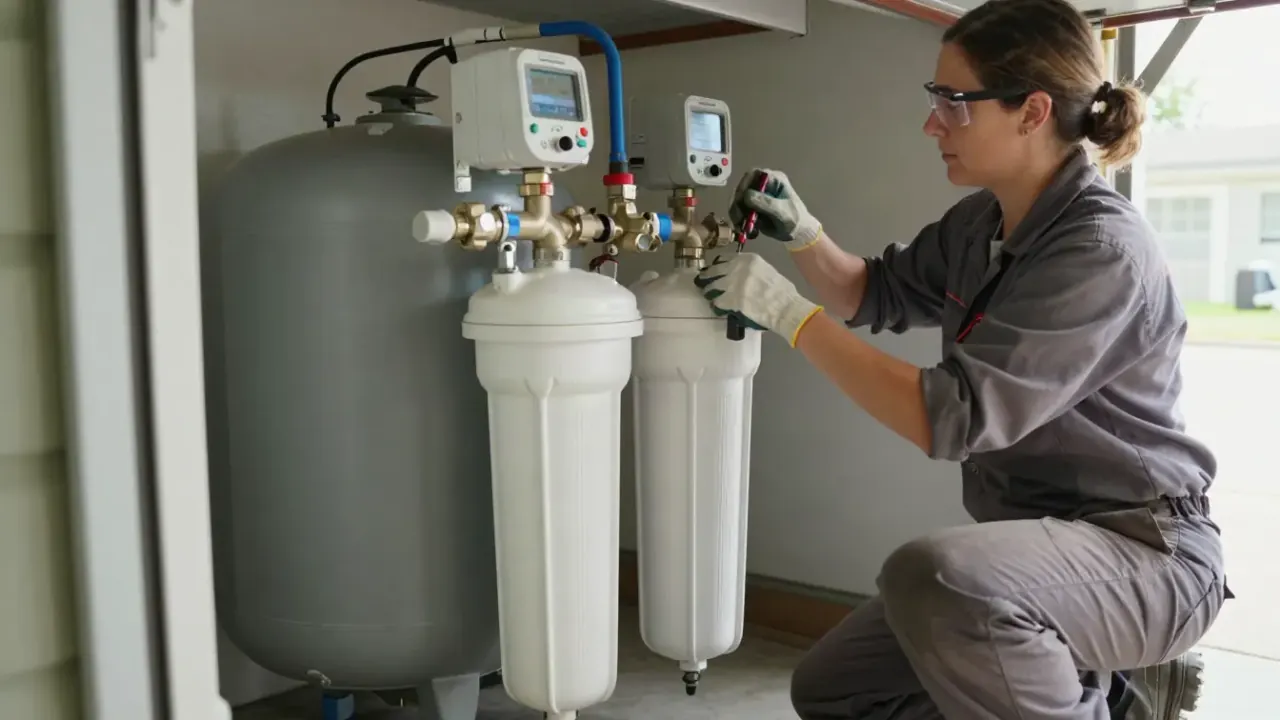
We run a full manual regeneration, confirm the brine draw, and test hardness at the tap again. You get a walkthrough of the settings, the salt type to buy, and when to schedule the next service. If anything acts up in the following weeks, one call brings us back.
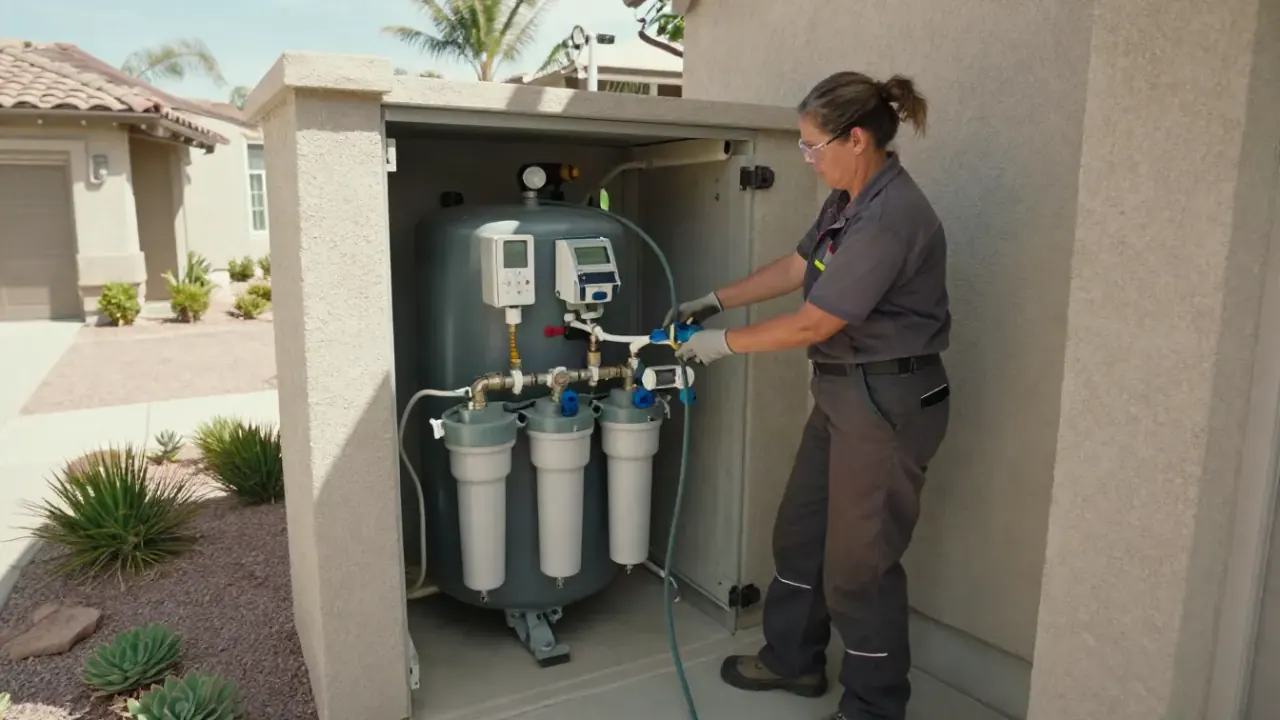
Measures incoming and outgoing mineral content so we can prove whether the softener is working and by how much. Numbers before and after guide every repair decision.
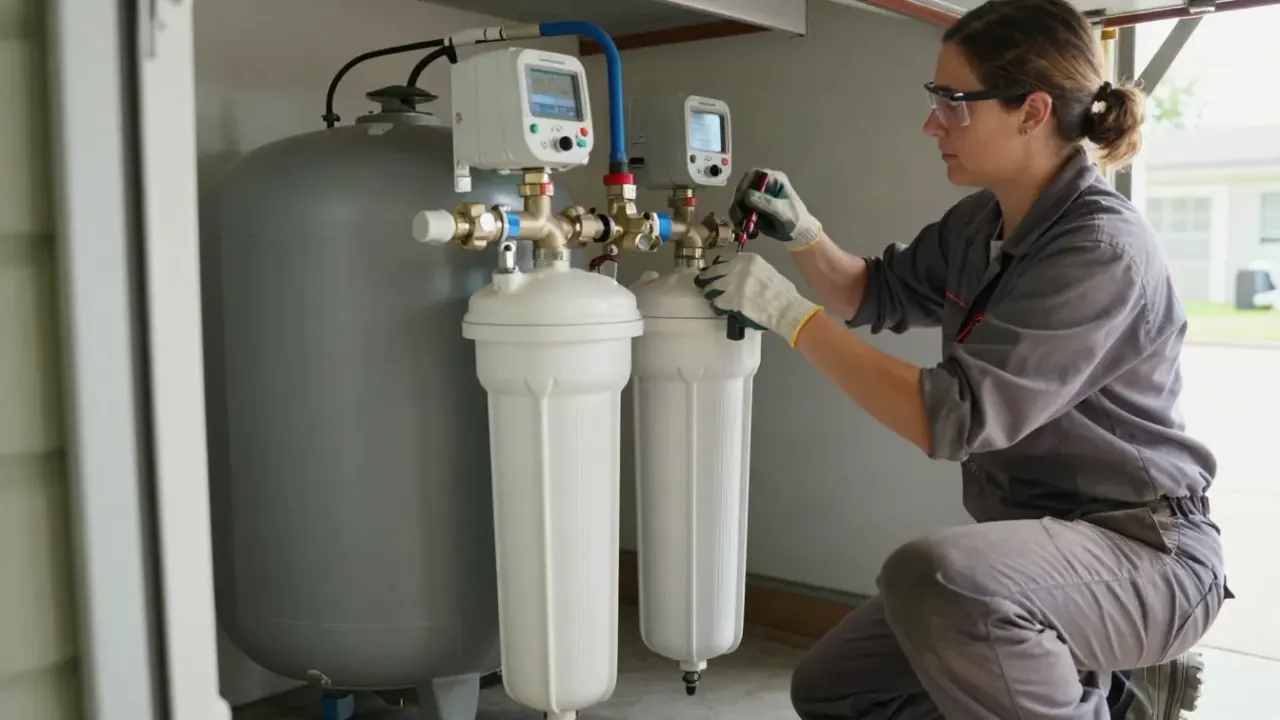
The bypass isolates the unit so we can work without shutting off the whole house. The tank wrench opens the resin vessel safely without cracking the collar.
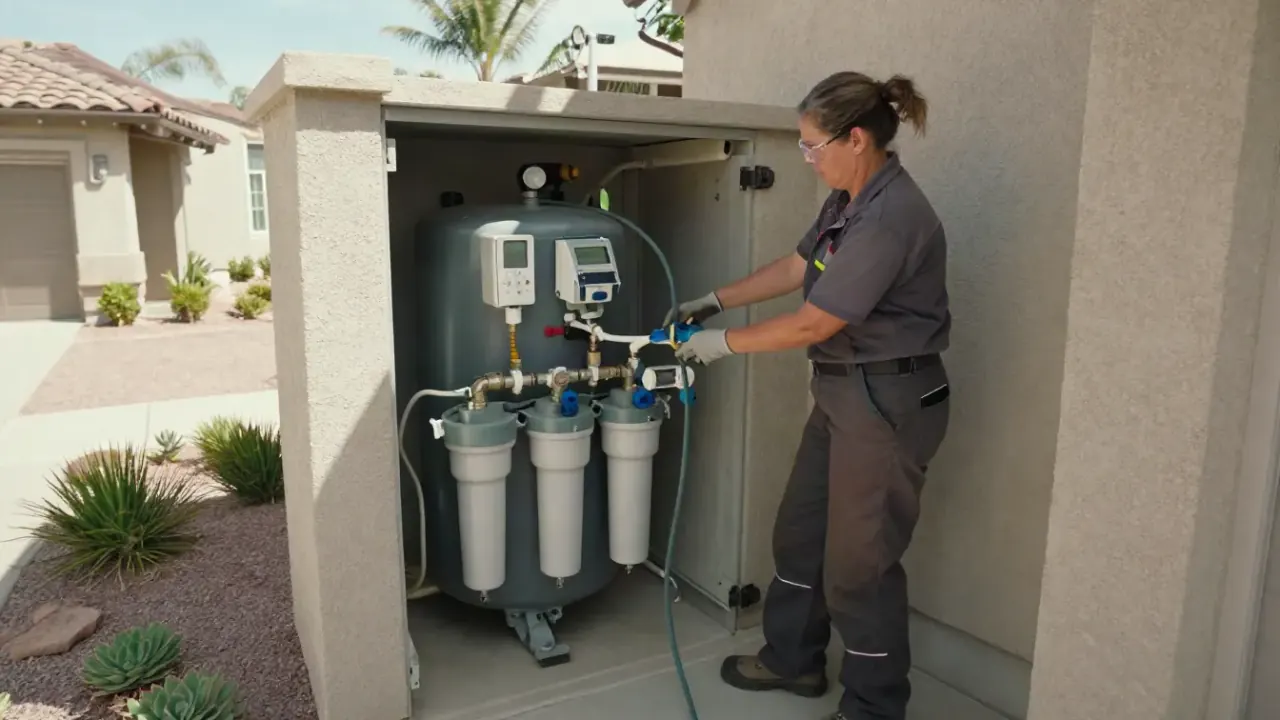
Used to break down brine line and supply connections cleanly when a fitting or valve has to come out. Clean cuts mean fewer leaks on reassembly.
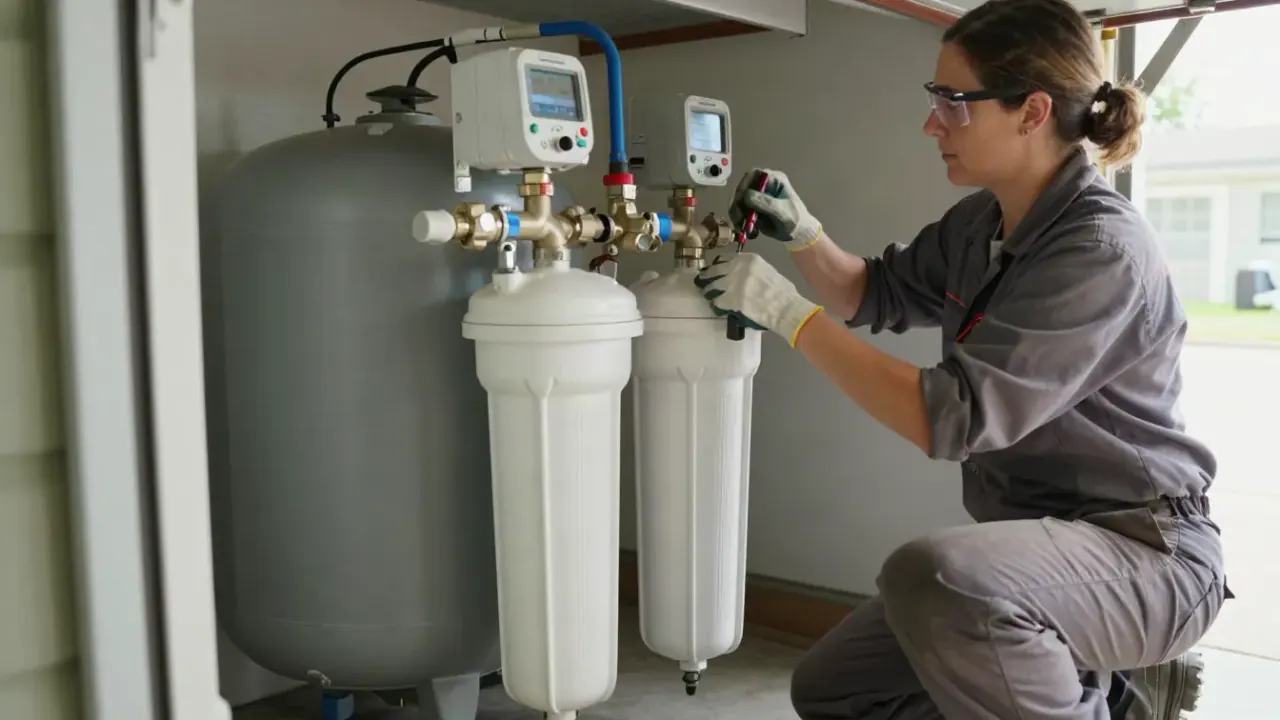
Pulls sludge, old salt, and standing brine out of the tank so we can inspect the bottom, the float, and the brine valve without making a mess of your garage.
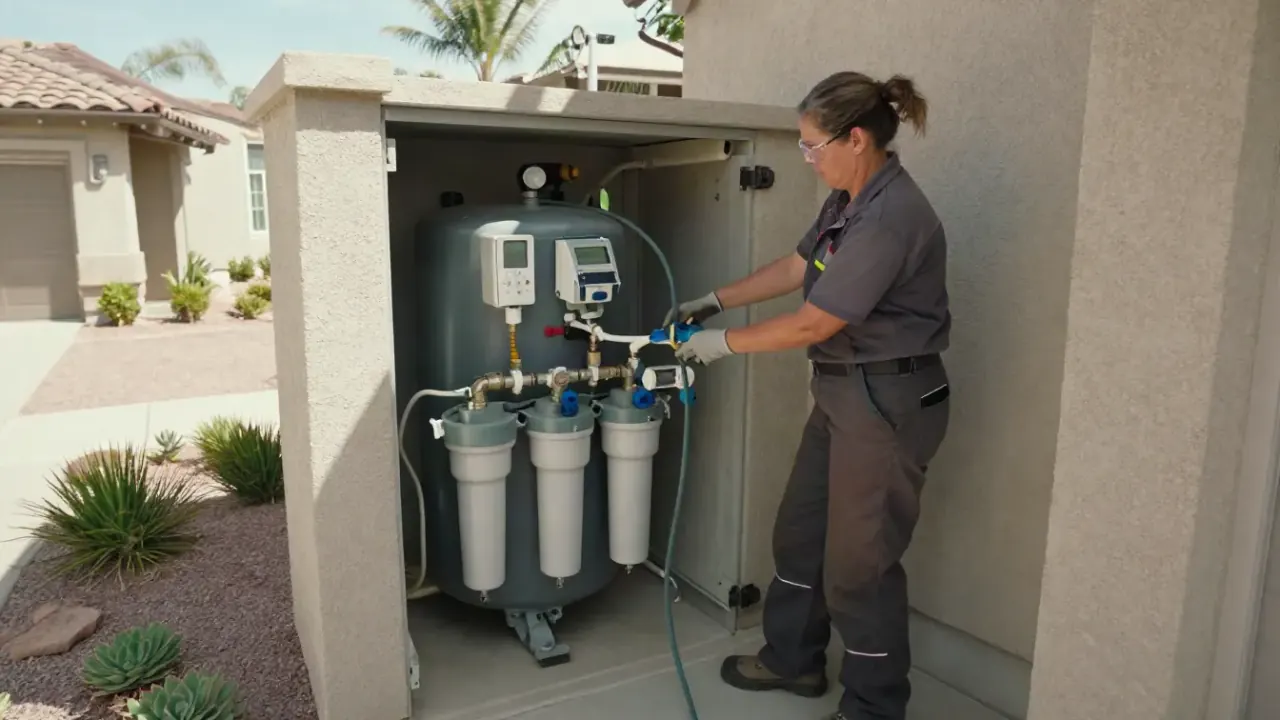
For copper supply repairs where a fitting has to be replaced. We protect the surrounding area and pressure-test the joint before restoring flow.
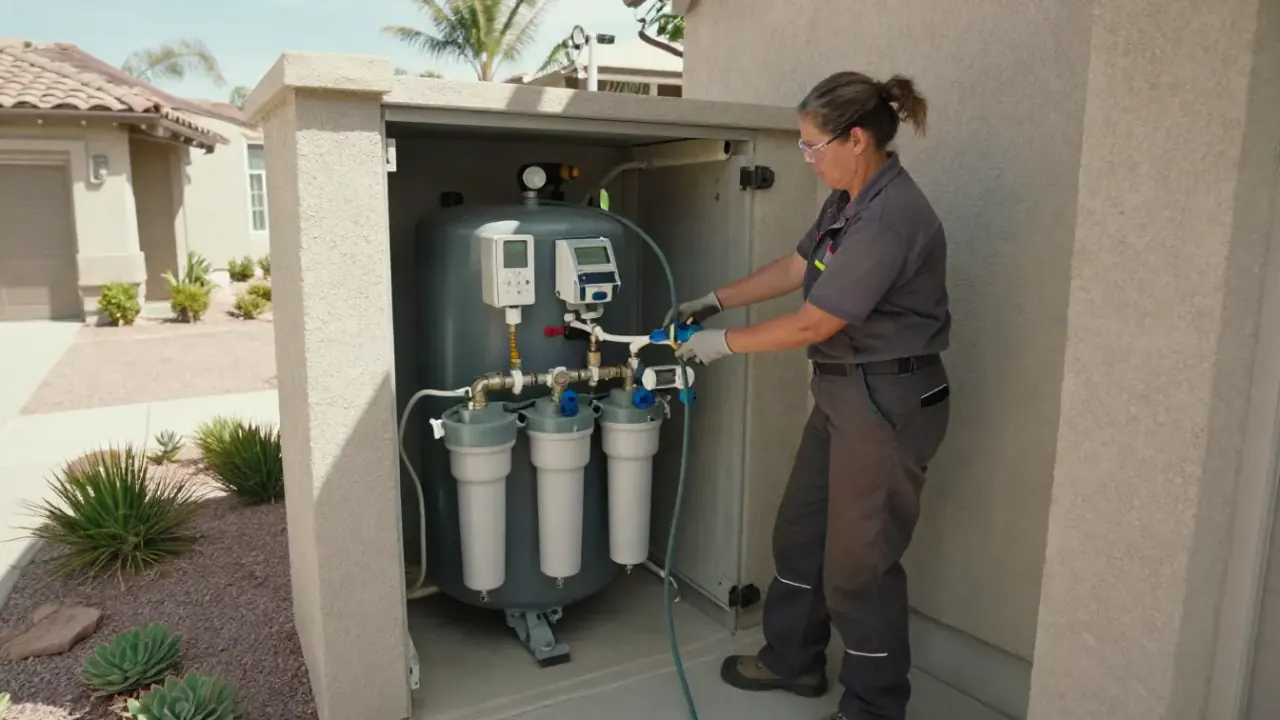
Fleck, Autotrol, and Clack pistons, seals, and motors ride on the truck so most control head failures are fixed in a single visit.
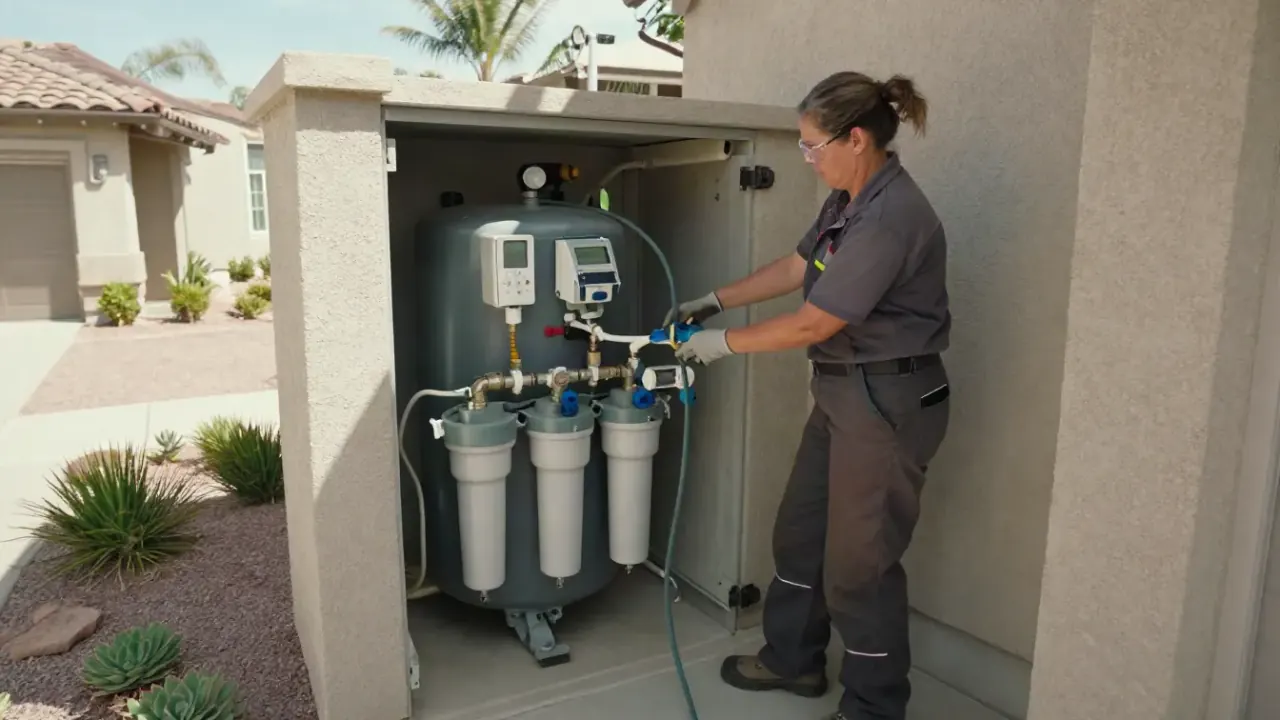
We follow the standard that governs residential cation exchange softeners, from the resin we install to the brine system we rebuild. That means parts and materials rated for potable water service, not generic substitutes that fail early.
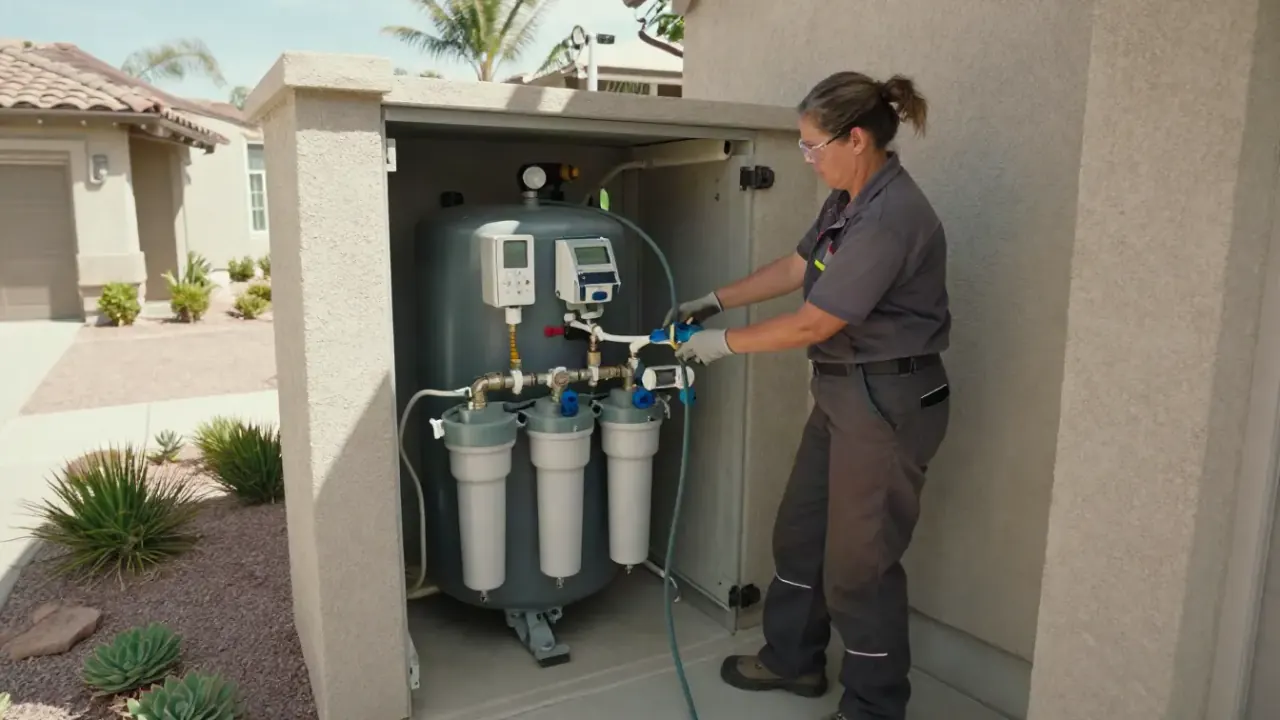
Every diagnosis includes manually stepping the control valve through backwash, brine draw, rinse, and refill. Watching each position tells us exactly where the failure sits, whether it is the piston, the motor, or the timer.
We test hardness, cycle the control valve, and check the brine tank for bridging or sludge. Nine times out of ten the fix is a valve rebuild or a brine valve replacement, both done on site with parts from the truck. Soft water returns the same day, salt use normalizes, and you avoid replacing a unit that still has years left in the tank.
We isolate the unit with the bypass valve, dry the assembly, and pressurize it section by section to find the source. Common culprits are control valve O-rings, a cracked bypass, or a loose brine line fitting. The leak stops the same visit, the floor stays dry, and we pressure-test the repair before restoring the unit to service.
We inspect the unit, test the water, and give you a clear repair-versus-replace recommendation with pricing. If replacement is the right call, we can remove the old unit and set a new one on the same loop. You get a documented answer for the transaction, and the home has working soft water before closing.
We measure hardness at the tap and compare it to the incoming supply. If the unit is passing hard water, we check resin condition, the bypass valve position, and whether the regeneration cycle is actually completing. You find out whether it is a settings problem, a bypass left open, or depleted resin, and we fix the actual cause instead of guessing.
Diamond Bar water comes in hard, and the foothill neighborhoods around Pantera Park and Sycamore Canyon see the same mineral load that wears out softeners across Los Angeles County. Most homes here run on municipal supply with hardness high enough that a softener is not optional if you want spot-free dishes and a long-lived water heater. The housing stock matters too: many homes built in the 1980s and 1990s still have original builder-grade units, and those control valves are at the age where seals harden and pistons stick. When a customer calls for water softener troubleshooting Diamond Bar, we usually find the failure is mechanical rather than electronic, which is good news because it is cheaper to fix. We also see seasonal patterns. Late fall and winter bring colder incoming water, which changes how efficiently resin grabs calcium, and homeowners sometimes mistake that for a failing unit. We test before we recommend anything. Whether you are in The Country, Stonegate, or South Pointe, we carry the parts to finish most repairs the same day and leave you with documented hardness readings.
A Windwood homeowner's Fleck 5600 stopped brining. Dishes came out spotted, salt level never dropped, and the unit hummed but never pulled brine. Hardness at the tap measured 11 grains per gallon, essentially untreated water.
We rebuilt the control head with a new piston and seal kit, cleared a salt bridge in the brine tank, and reset the salt dose. Post-repair hardness measured under 1 grain per gallon, and a full manual regeneration confirmed proper brine draw.
Keep the brine tank no more than two-thirds full, use clean pellet salt, and schedule an annual valve inspection. At this hardness level, check the salt level monthly.
A Cimarron Oaks customer found water pooling under the softener every morning. The bypass valve had a hairline crack and the O-rings at the control head were flattened. The unit was still softening, but the leak was worsening.
We isolated the unit, replaced the bypass valve and control head O-rings, and pressure-tested the assembly. The floor stayed dry through a full regeneration cycle, and hardness readings held steady below 1 grain per gallon.
Check the base of the unit monthly for moisture. Replace bypass O-rings every five to seven years as preventive maintenance, before they crack.
A Diamond Point home had a 14-year-old softener that ran and regenerated normally but passed hard water. Resin had depleted to the point where ion exchange no longer worked. Hardness at the tap read 9 grains per gallon.
We emptied and flushed the resin tank, refilled it with fresh ion exchange resin, and recalibrated the regeneration schedule. Post-service hardness dropped to 1 grain per gallon, and soap lather returned at every fixture.
Resin typically lasts 10 to 15 years at this hardness. Test your water annually and watch for hardness creeping back up as the signal to plan the next resin change.
Most softener failures announce themselves before they quit completely. Catching these early is the difference between a $200 repair and a $900 replacement.
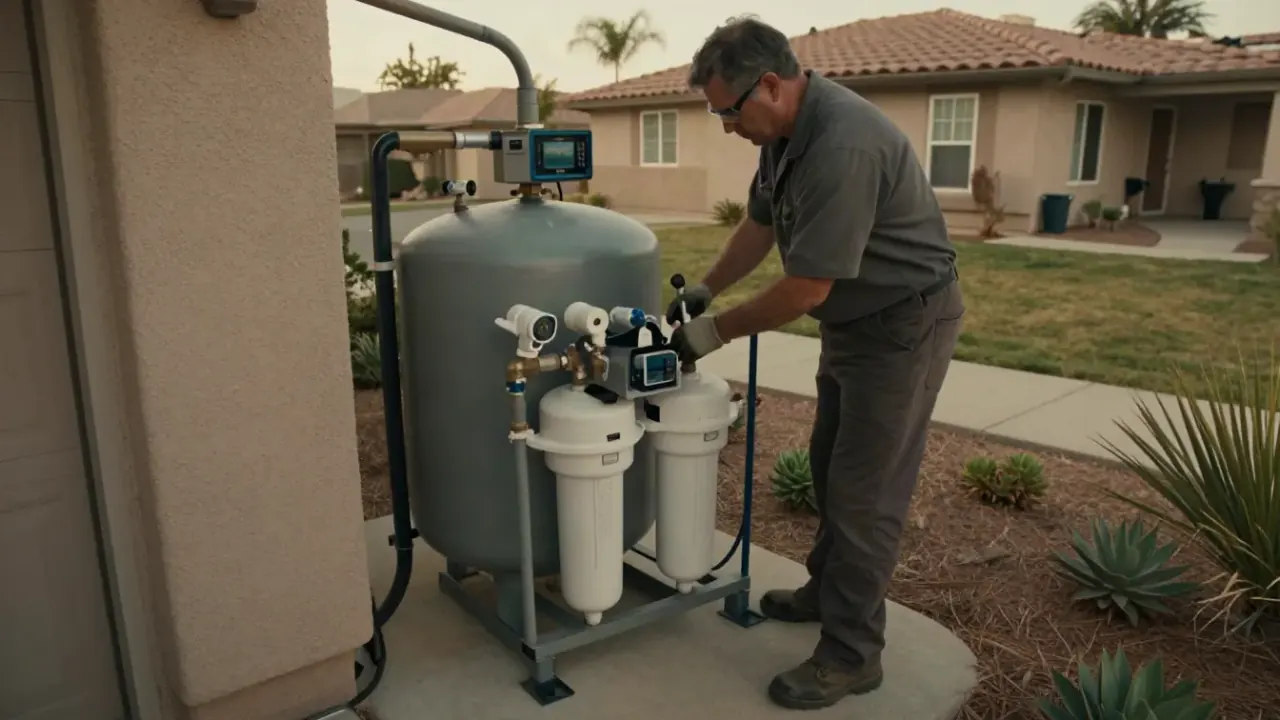
We test hardness at the tap to confirm the softener has stopped working, then trace it to the valve, resin, or brine side. Most spot-return cases are a control valve that stopped indexing or resin that is fully depleted, and both are repairable in one visit. If ignored, scale deposits build inside your water heater and pipes, cutting efficiency and eventually restricting flow. The mineral film also etches glassware and shower doors permanently.
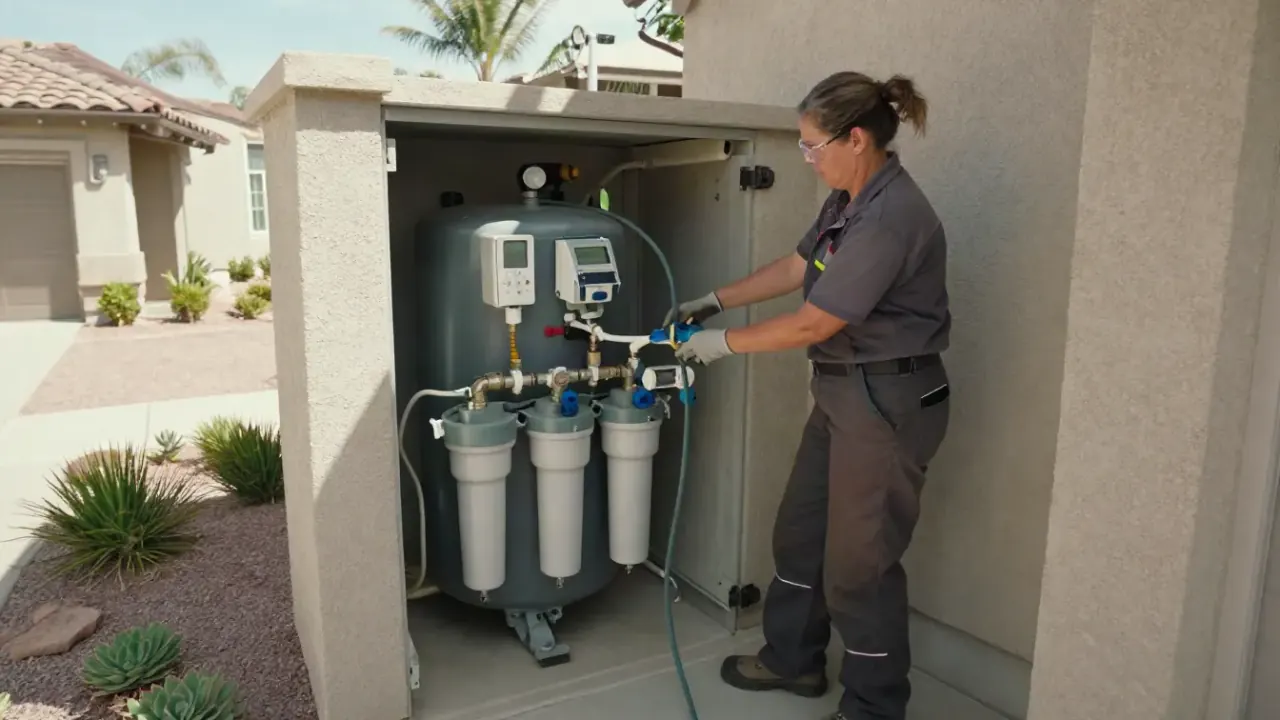
We manually cycle the control head, watch the brine draw, and check the brine valve and float. If the motor or piston is the fault, we rebuild the head on site. If the settings are wrong, we reprogram the regeneration cycle for your household. A unit that never brines is just a tank of hard water sitting in your garage. Salt usage may look normal while the resin slowly stops working, so the failure goes unnoticed for weeks.
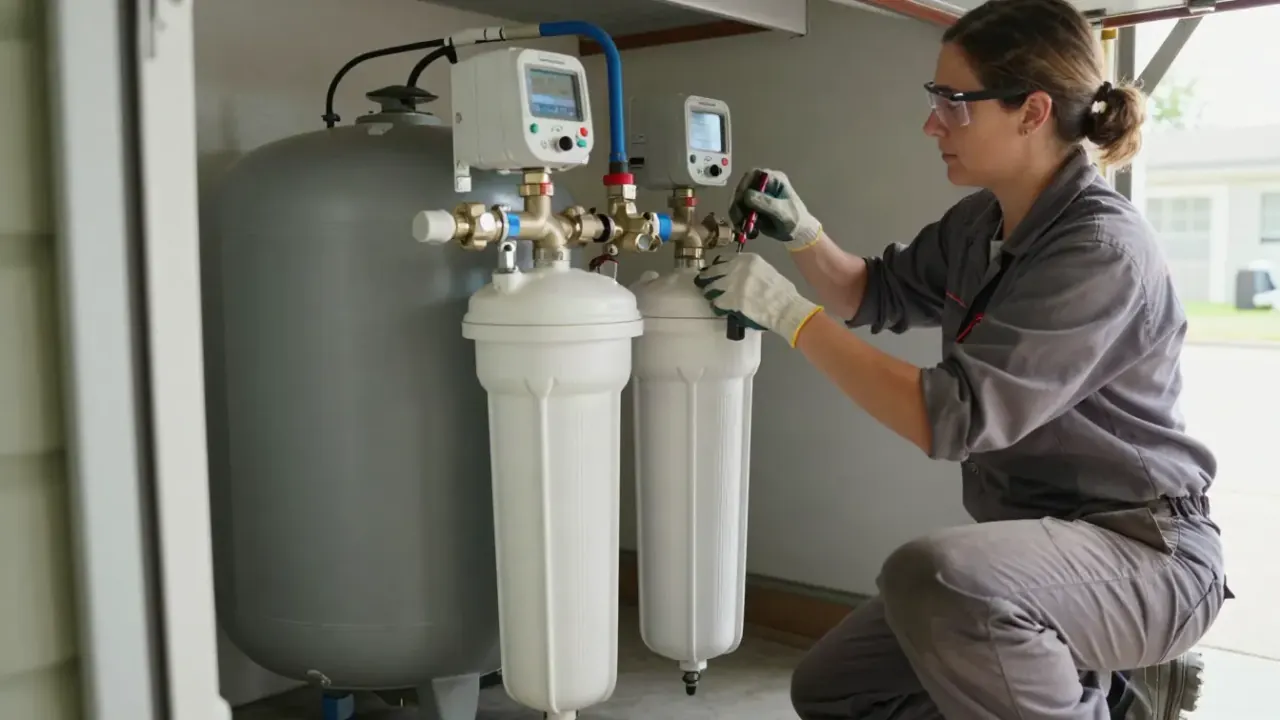
We inspect the control valve timing, check for a stuck piston, and verify the brine refill level. Fixing the valve and resetting the salt dose typically cuts consumption by half. We show you the corrected settings before we leave. A softener stuck in regeneration can burn a 40-pound bag of salt in under two weeks and send hundreds of extra gallons down the drain every cycle. That adds up fast on both the water and salt bills.
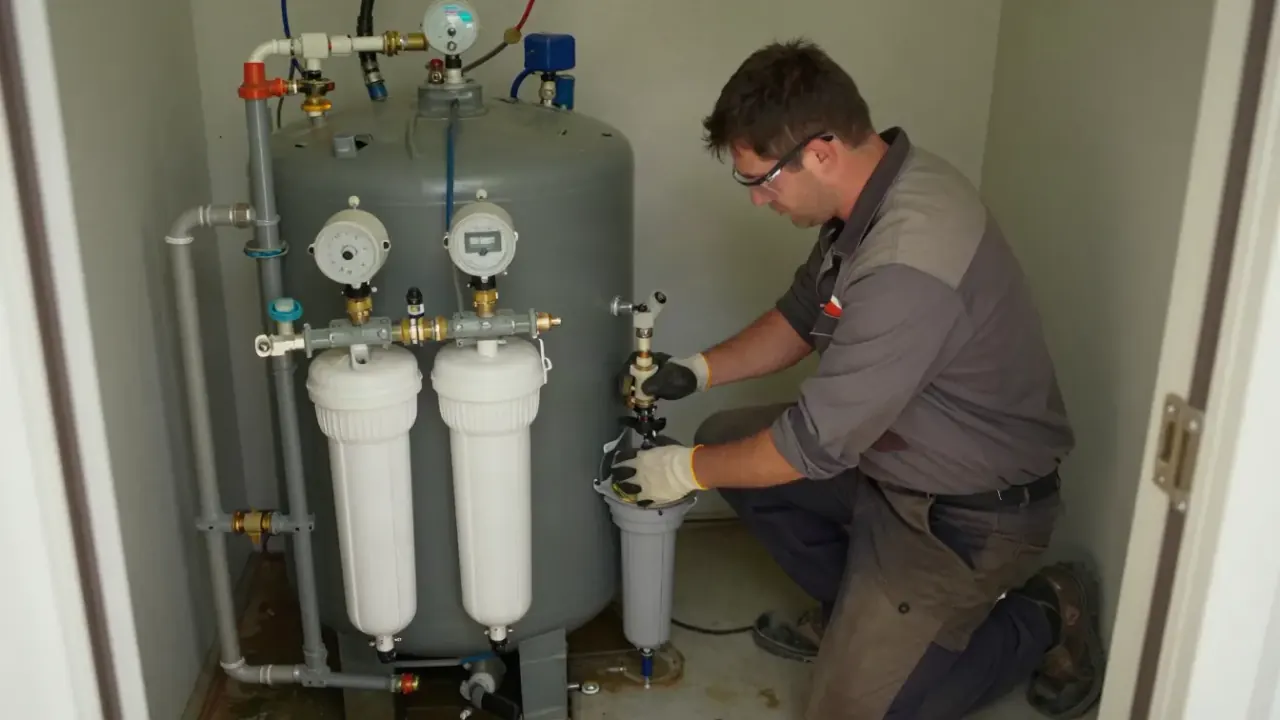
Once the softener is repaired and ion exchange is working again, new scale stops forming. We also check aerators and the sediment filter, and can recommend a whole-house filtration add-on if sediment is contributing to the restriction. Scale buildup in pipes and fixtures raises system pressure and reduces flow at every tap. Left alone, it shortens the life of your water heater and can force a repipe years earlier than necessary.
Most repairs finish in two to four hours, so you are back to spot-free glassware and better lather by evening. We carry Fleck and Clack control valves, Autotrol pistons, and common resin tank parts on the truck, which means fewer return trips and no waiting a week for a part to ship.
A softener that regenerates every night because the valve is stuck can burn through a 40-pound bag of water softener salt in under two weeks. Fixing the control head and resetting the regeneration schedule typically cuts salt use by half and trims hundreds of gallons a month off your bill.
Scale buildup in pipes raises pressure and shortens water heater life. Once we restore ion exchange, the calcium stops depositing inside your plumbing. Customers in Cimarron Oaks and Valle Lindo often notice hot water recovers faster within a month of the repair.
If your unit is a 12-year-old builder-grade model with a cracked resin tank, we will tell you plainly that replacement beats another repair. If it is a Kinetico or SoftPro with a bad seal, we fix it. You get the honest call, not the upsell.
Typical 2026 pricing in Diamond Bar runs from $180 for a simple seal or O-ring replacement to about $850 for a full resin tank change. Most calls land in the $250 to $450 range. The price depends on which part failed, how accessible the unit is, and whether the control head needs a rebuild or a full replacement. We quote the total before we start, parts and labor together, so there is no hourly surprise. If you are comparing a water softener fix Diamond Bar quotes, ask whether the price includes the diagnostic and the post-repair hardness test. Ours does.
What your estimate is based on
$180 - $850 depending on scope A $300 repair that restores soft water protects your water heater, pipes, and fixtures from scale damage that costs far more to undo. Fixing the softener is almost always cheaper than living with hard water.
Clear records you can keep and share.
Before and after numbers at your tap
What was replaced and why
Salt dose and regeneration schedule
Age alone does not decide whether a softener is worth fixing. The condition of the tank and valve body matters more than the year it was built.
A sound resin tank can take new resin and run for years more. A cracked or weeping tank means replacement is the better call.
Control heads with scored bores cannot hold a rebuild. If the body is worn, a new head or unit costs less than repeated repairs.
One or two repairs over a decade is normal. Three or more in two years means the unit is telling you it is done.
Outside these areas? Call and ask about your street. (909) 415-2296
Most repairs land between $180 and $650 in 2026, depending on the part. A control valve seal kit and labor runs $180 to $280. A full valve rebuild with a new piston and motor sits around $350 to $500. Resin tank replacement pushes toward $600 to $850 because of the labor to empty and refill the tank. We quote the price before we start.
The three most common causes we find are a control valve that stopped indexing, resin depletion after years of service, and a brine tank full of sludge or bridged salt that blocks regeneration. Hard water spots returning, high salt usage, or a unit that runs but never brines all point to one of those. A hardness test at the tap confirms it in minutes.
We do, and we cover all of Diamond Bar plus Walnut, Chino Hills, Brea, Pomona, and West Covina. We repair every major brand, including Fleck, Autotrol, Clack, Culligan, Kinetico, GE, Whirlpool, Aquasana, Pelican, and SoftPro. Call (909) 415-2296 and describe the symptoms; we will tell you what it likely is before we arrive.
Yes, in most cases. Leaks usually come from a failed O-ring at the control valve, a cracked bypass valve, or a loose brine line fitting. Those are same-day fixes because the parts are on the truck. If the resin tank itself is cracked, we bypass the unit to stop the leak immediately and schedule the tank swap, usually within a day or two.
Soft water is one call away. We diagnose, quote, and repair in the same visit, and we carry the parts to finish most jobs on the spot. Call (909) 415-2296 and tell us what your softener is doing.
Call (909) 415-2296 or email us and we will get back to you the same business day. We answer questions about hardness readings, salt use, and system sizing before you book anything. Serving Diamond Bar and Los Angeles County.