Hardness report
Before and after numbers at your tap
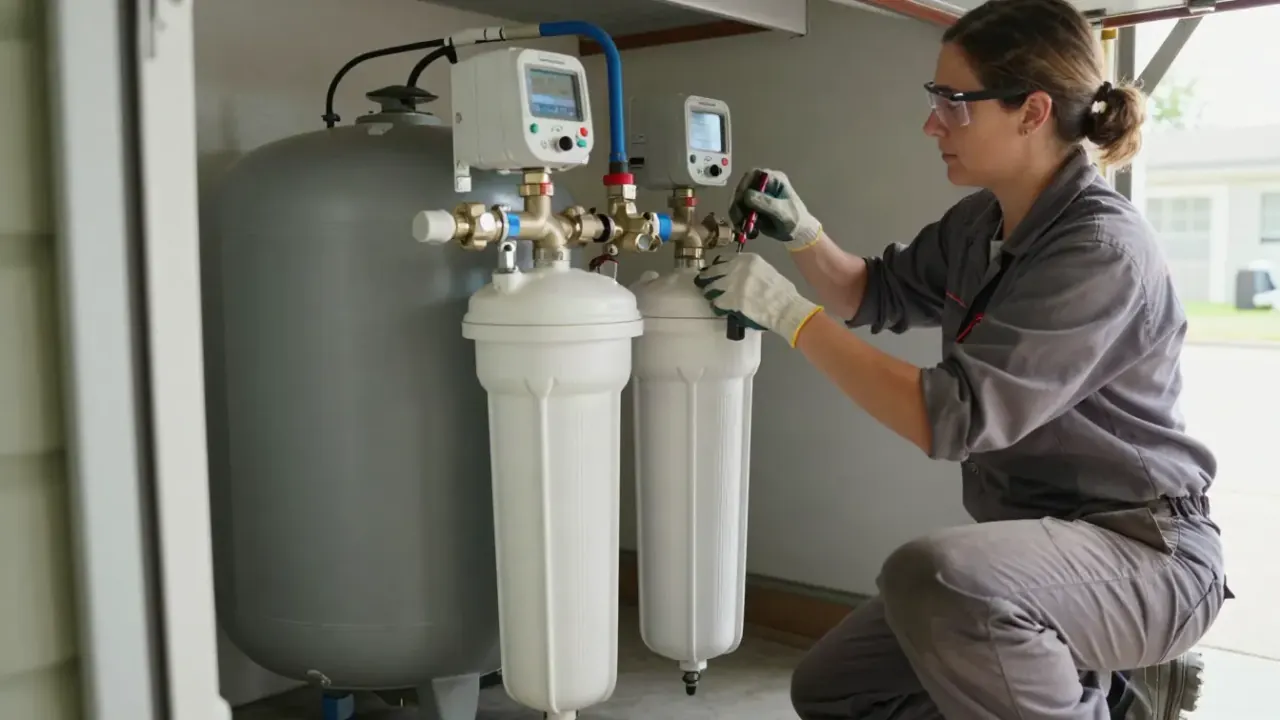
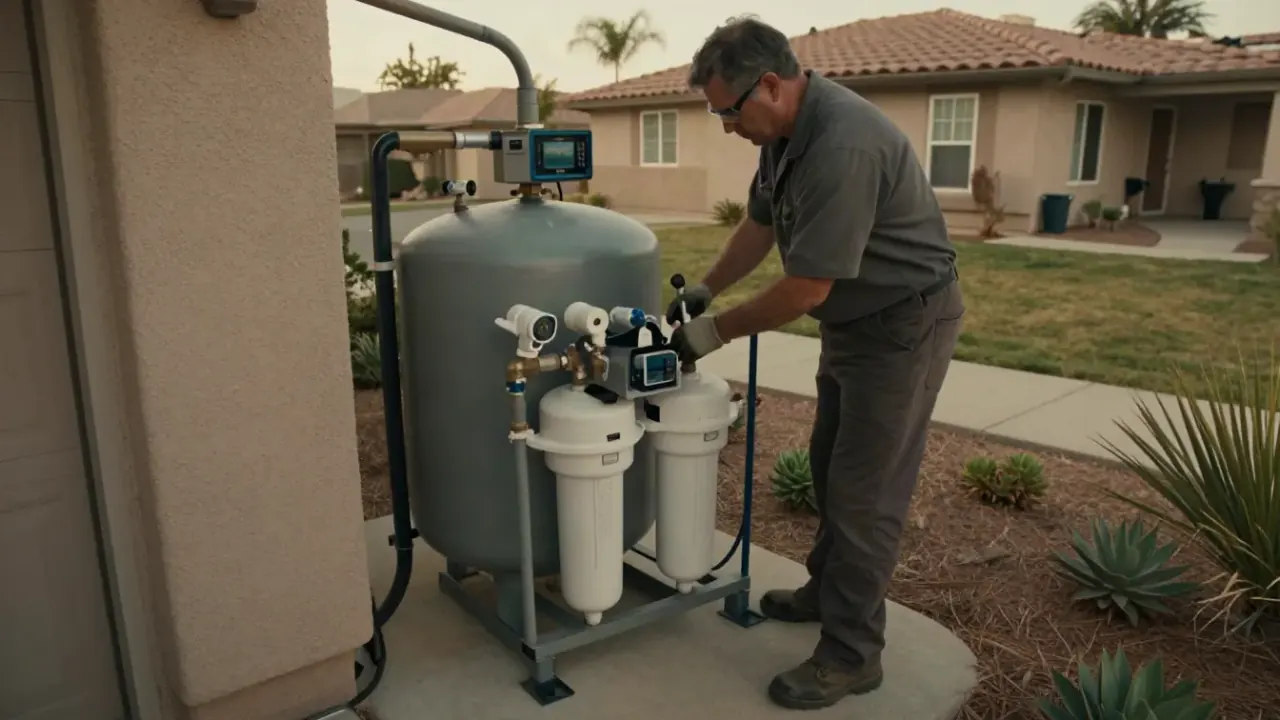
Resin Tank Replacement Diamond Bar CA is the fix when your softener runs but the water still spots glass and crusts the shower head. We pull the spent tank, match the new resin volume to your home's hardness, and reset the control valve so regeneration actually works again. Most Diamond Bar homes are done in a single visit, with the old tank and resin hauled off the same day.
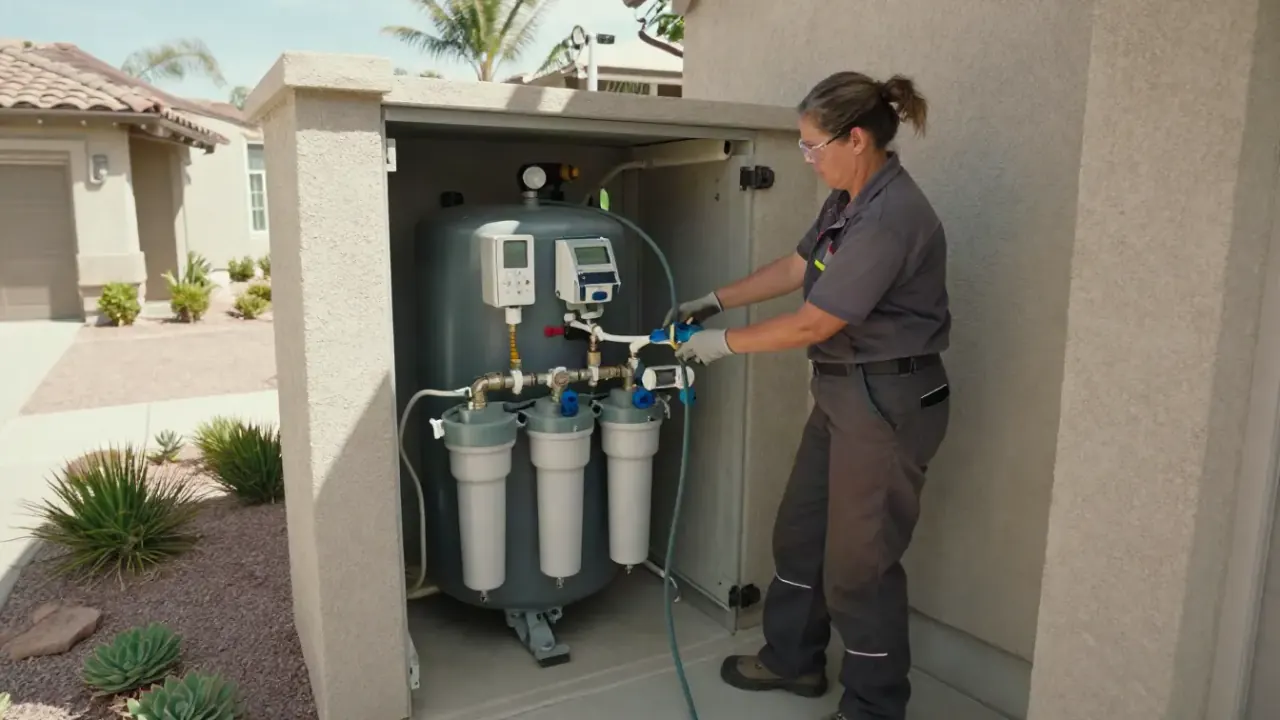
Every resin tank replacement we do covers the parts and labor that actually restore soft water. Here is what is in the standard job, and what we quote separately if your unit needs it.
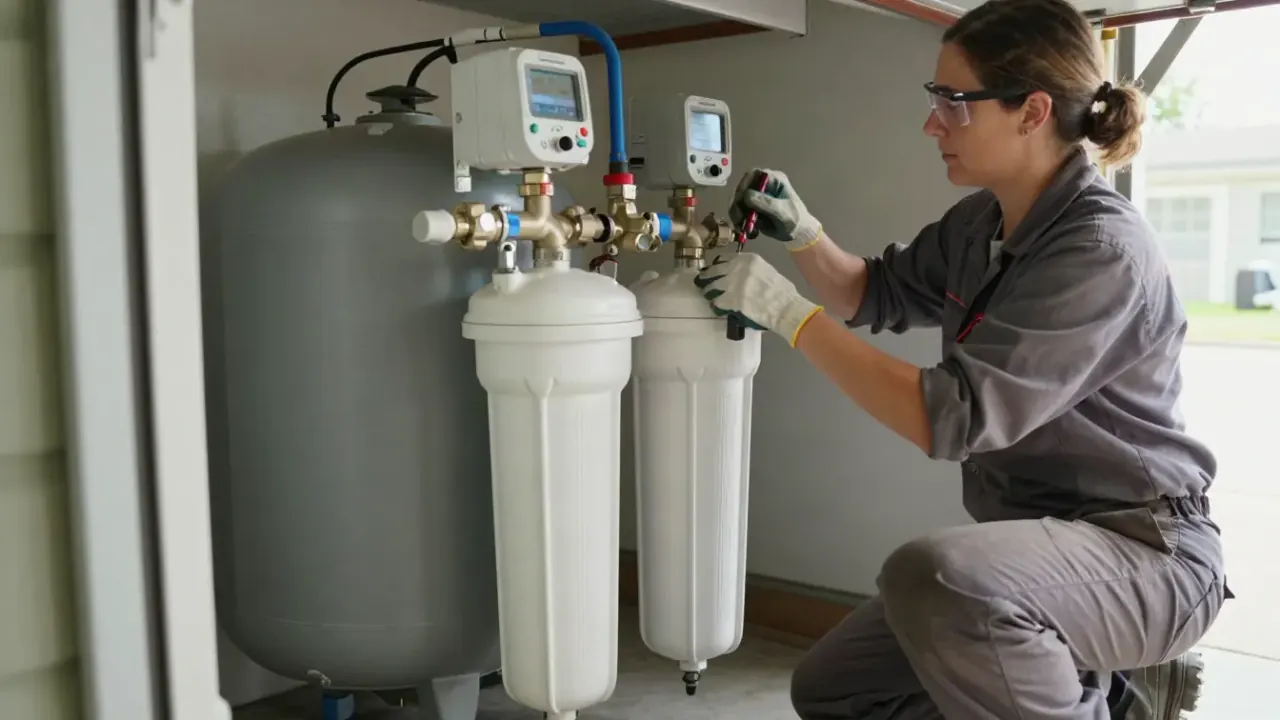
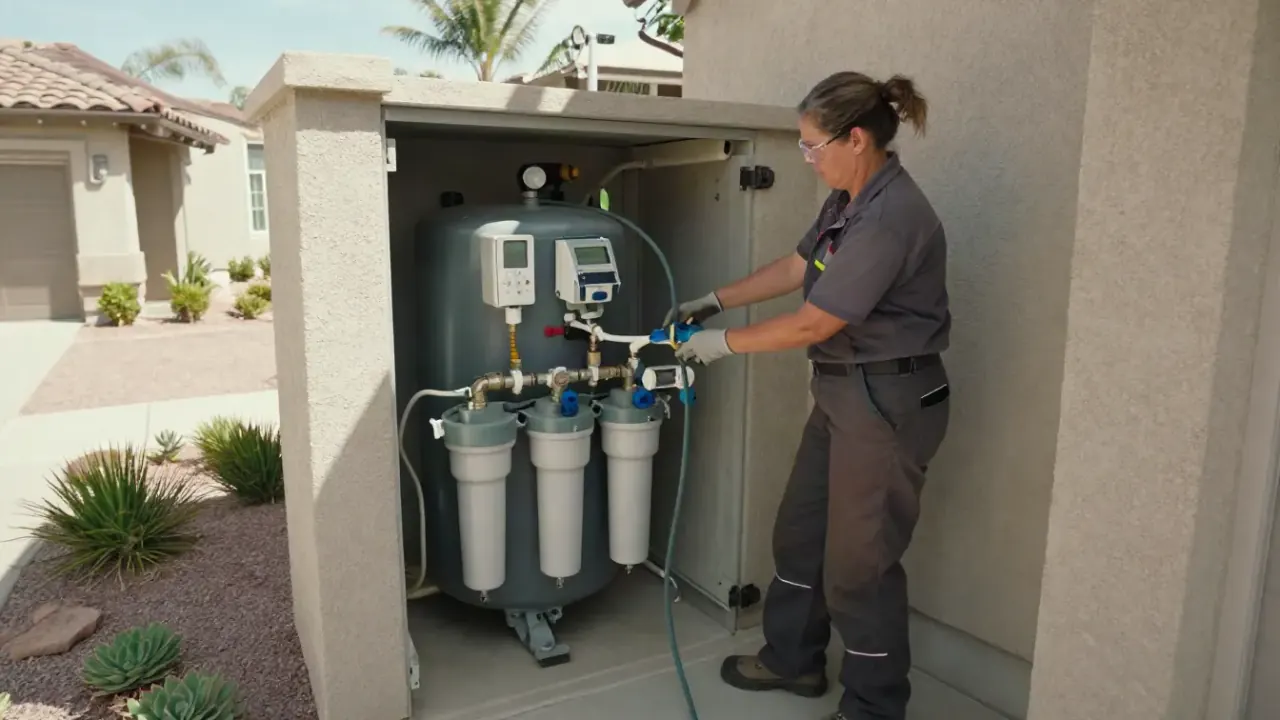
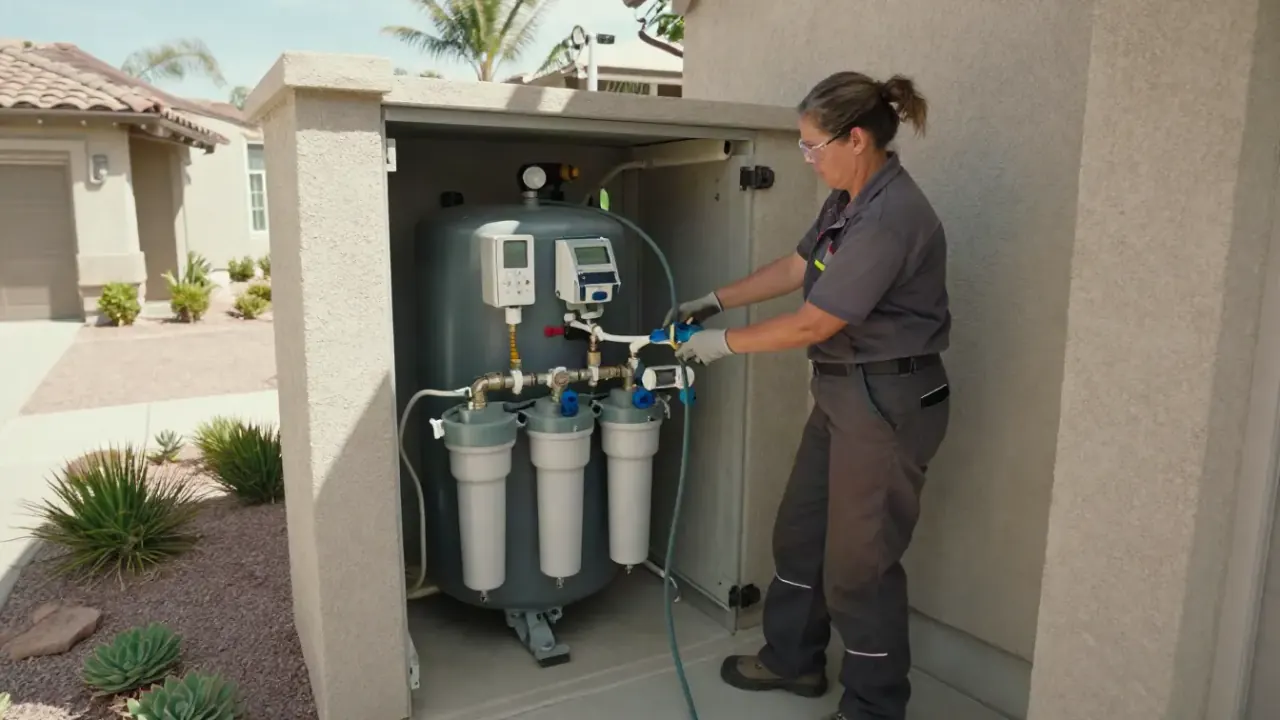
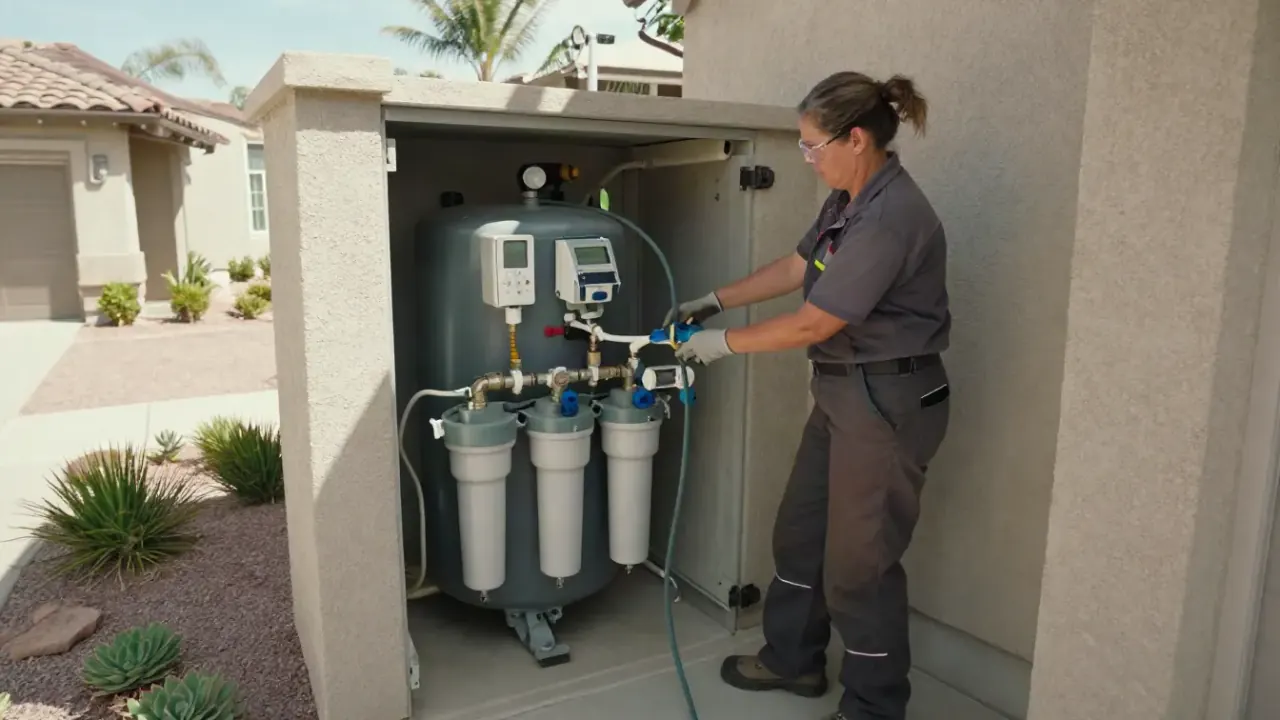
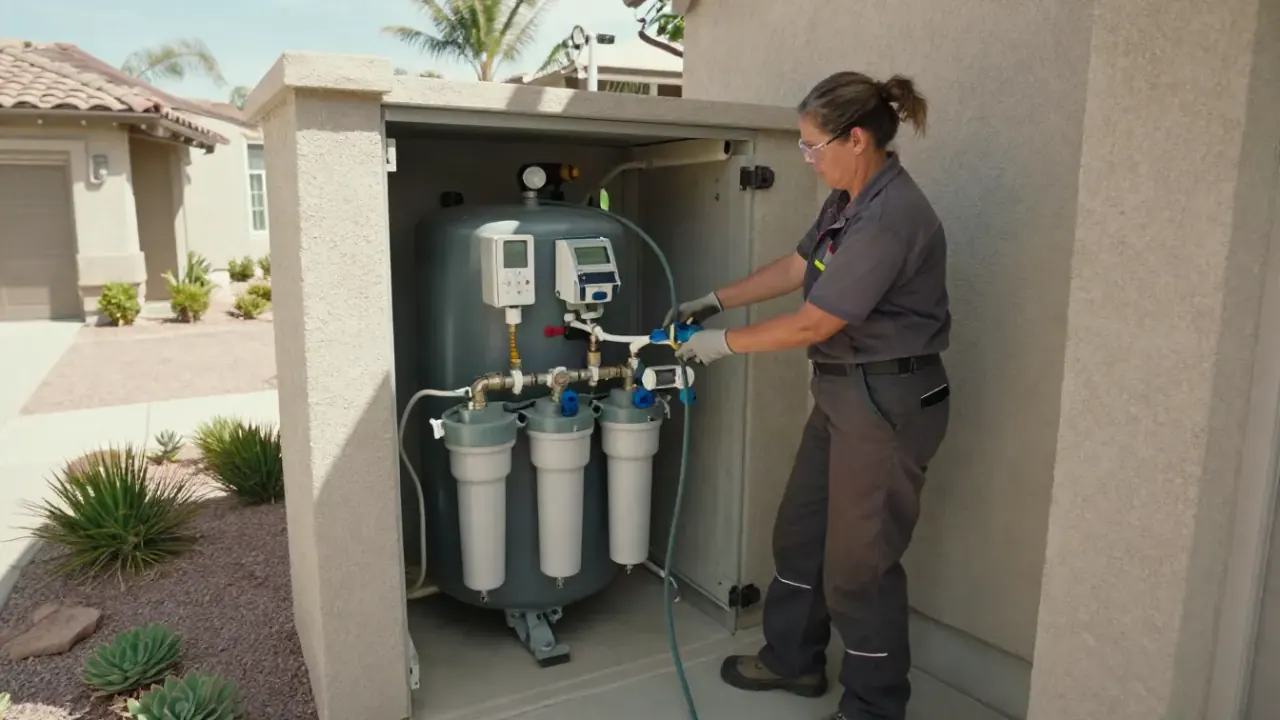
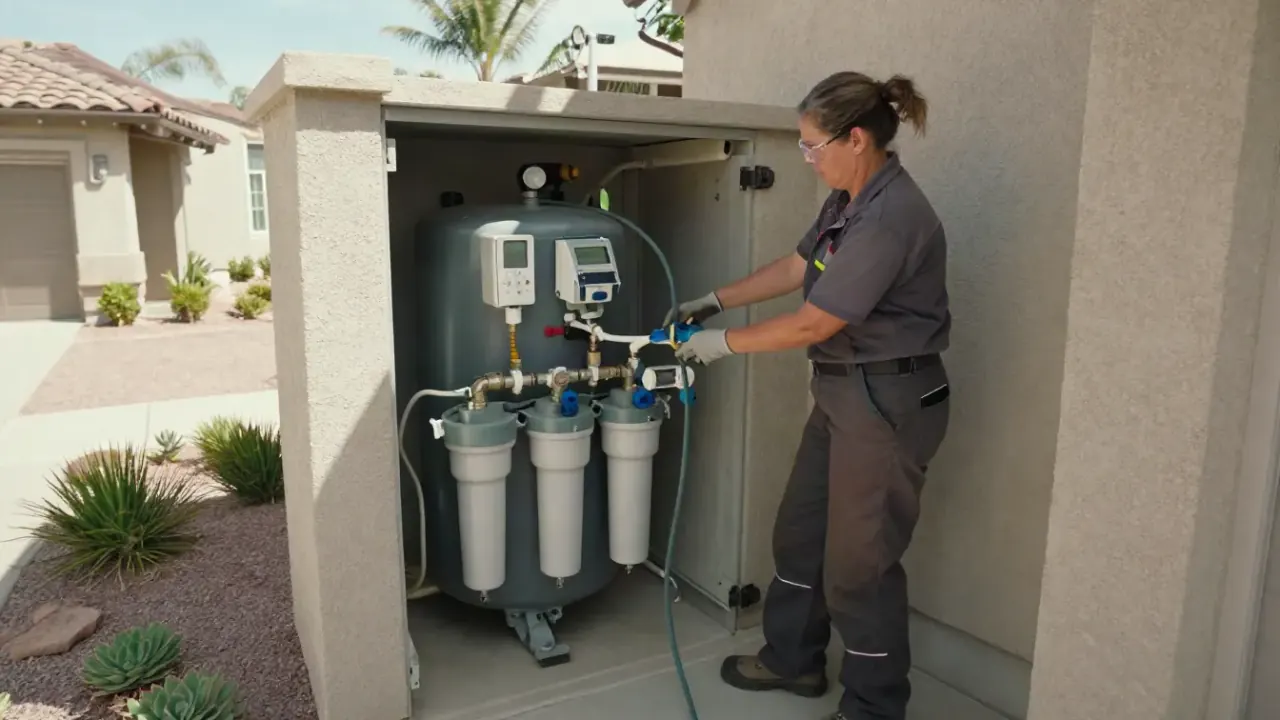
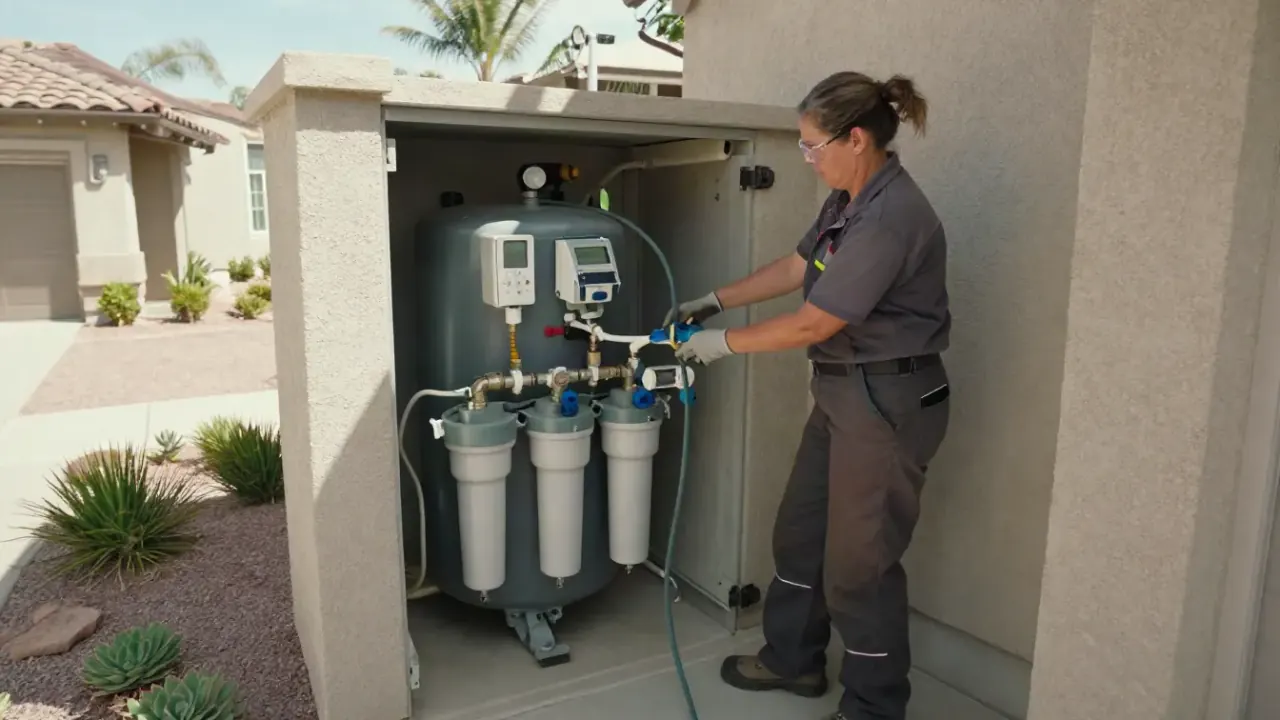
We swap the spent resin tank in your garage or side yard and restore soft water the same day. You get a hardness test before and after, plus the old tank hauled away.
We keep commercial softeners running so hard water does not scale your equipment. Property managers get flat quotes, scheduled windows, and documented hardness results.
Resin Tank Replacement Diamond Bar CA means removing the fiberglass pressure vessel that holds the ion exchange resin and installing a fresh tank loaded with new media. Resin beads are the working part of any softener; they grab calcium and magnesium out of your water and hold them until the brine cycle rinses them away. After roughly 10 to 15 years, or sooner under heavy hardness, those beads crack, foul, and lose capacity. The tank itself can also crack at the threads or the base. We replace the vessel, the resin, and the distributor tube together so you are not paying twice for the same job.
Diamond Bar sits on some of the harder water in Los Angeles County, and homes in The Country, Stonegate, and Sycamore Canyon often test 12 to 18 grains per gallon. That load wears resin out faster than the national average. If you are searching for water softener resin replacement in Diamond Bar, the usual trigger is softener not regenerating properly, high salt usage, or a brine tank that keeps turning into sludge. We test hardness and TDS at the tap, confirm the tank is the problem and not the control valve, then quote the work before we start.
We test the water first, then replace only what has actually failed.
We keep the job simple: test, isolate, swap, verify. Here is exactly what happens from the phone call to the final hardness reading.
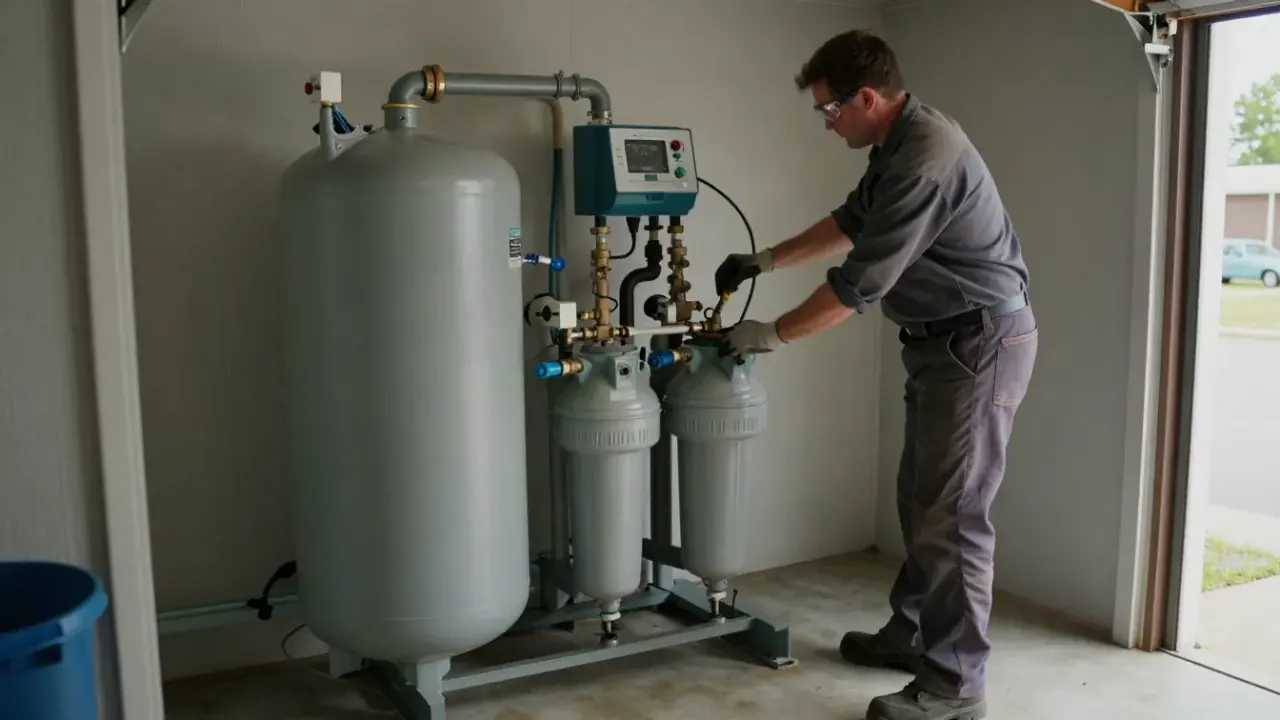
Call (909) 415-2296 and we ask three questions: how old is the softener, what does your water feel like, and is the brine tank wet or dry. That tells us whether you need a resin tank replacement or a valve repair. We schedule a window, usually same-day or next-day, and tell you what to have clear around the unit.
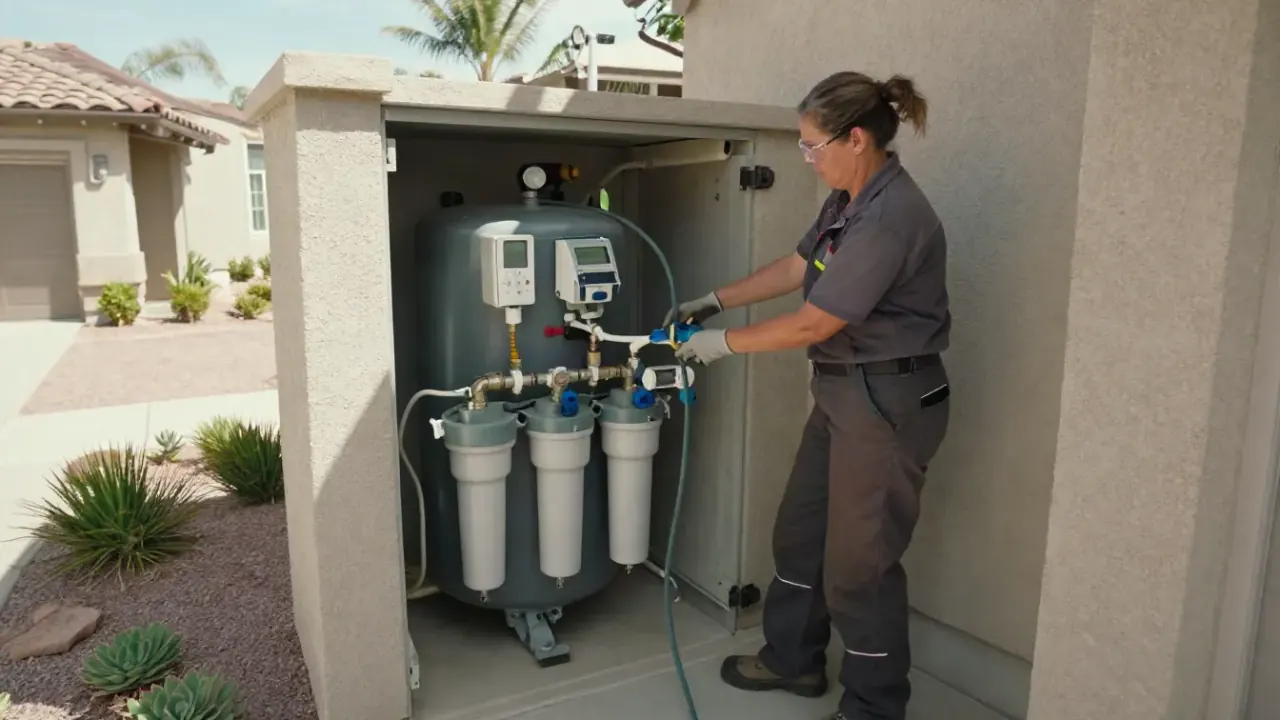
We test raw and treated hardness with a water hardness test kit and check TDS with a meter. If the treated water is still hard, the resin is spent or the valve is bypassing. We confirm which by watching a manual regeneration cycle and checking flow at the drain. Takes about 20 minutes.
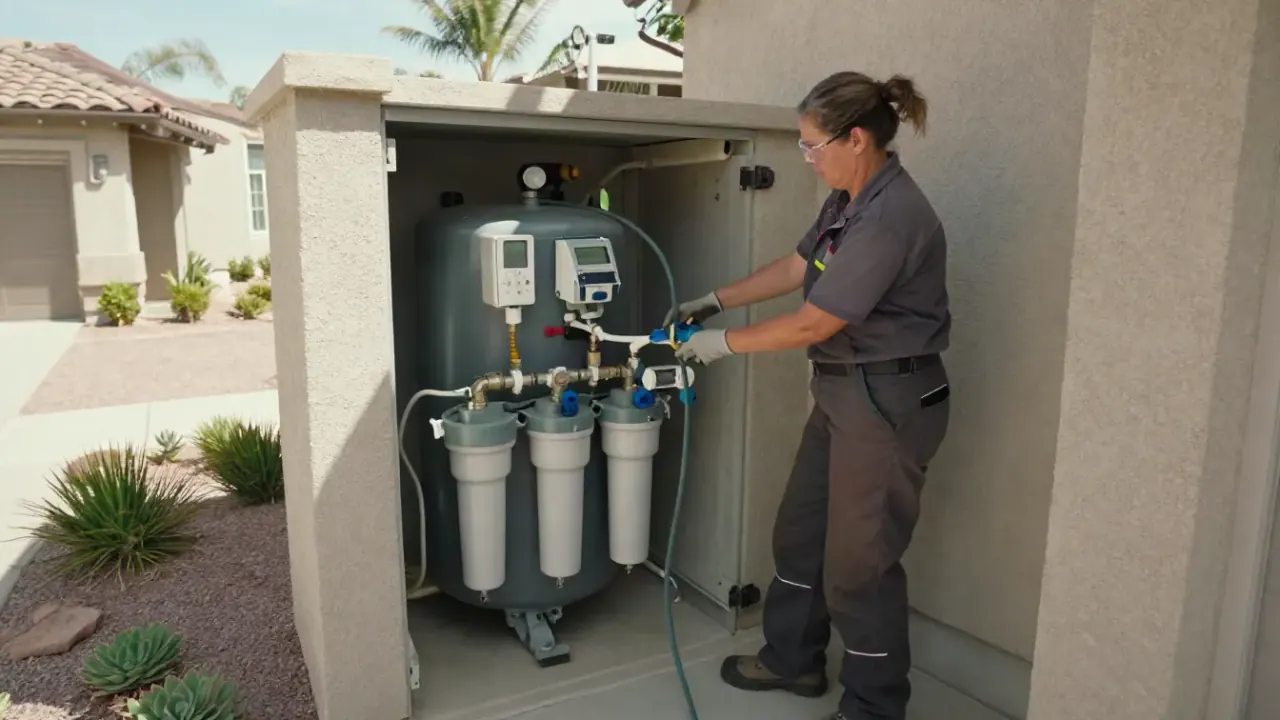
We shut the bypass valve, relieve pressure, and disconnect the control valve from the tank. The old tank is heavy with water and resin, so we drain it into a bucket and cap the lines. Floors get a drop cloth and a tray. Nothing goes down your drain that should not.
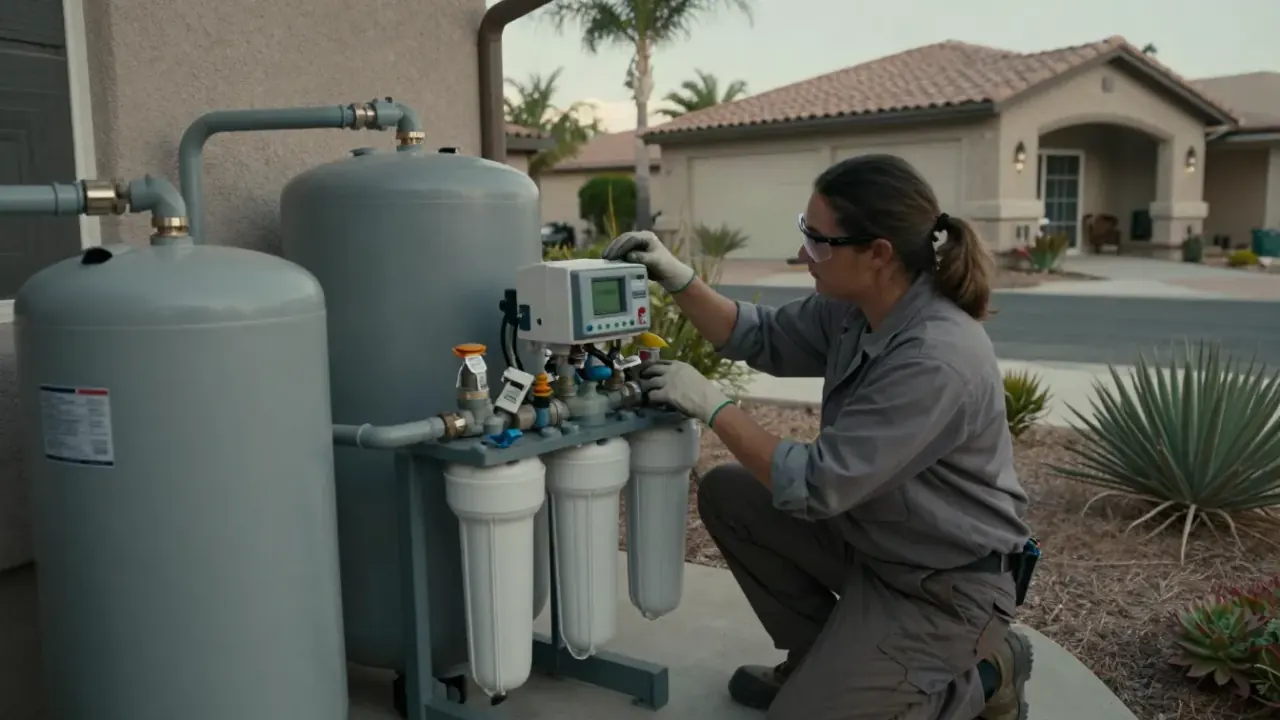
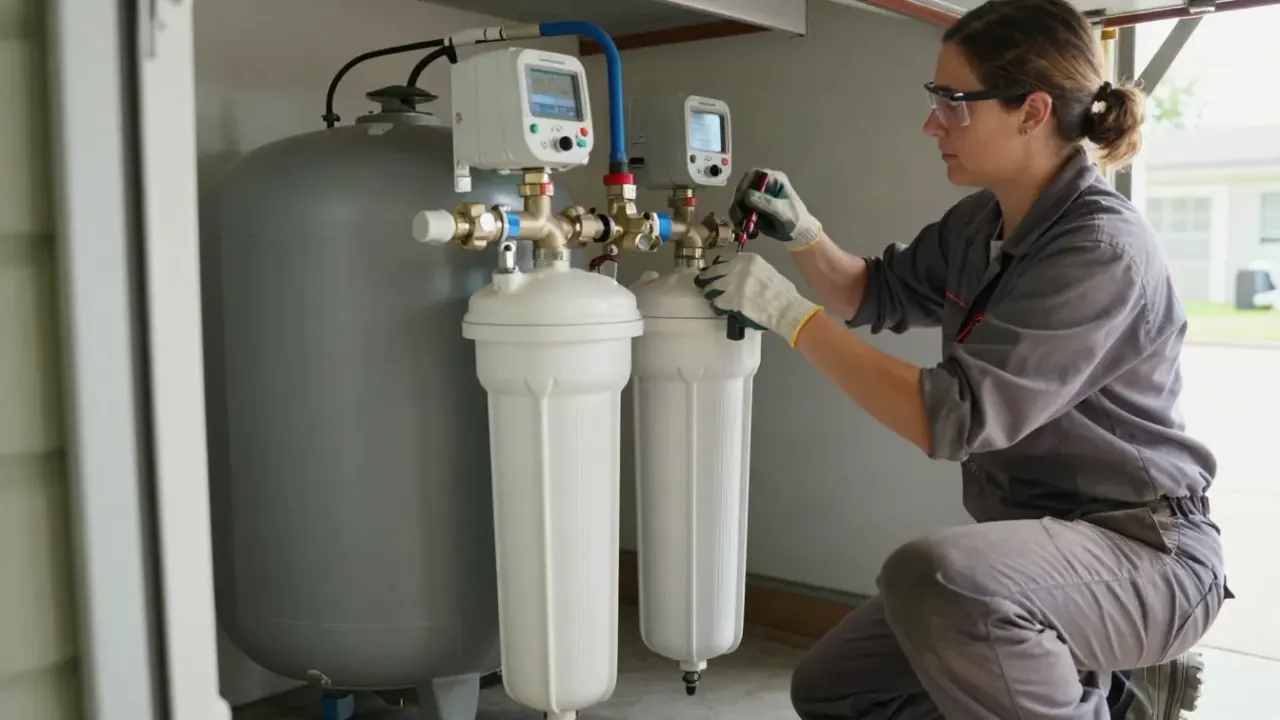
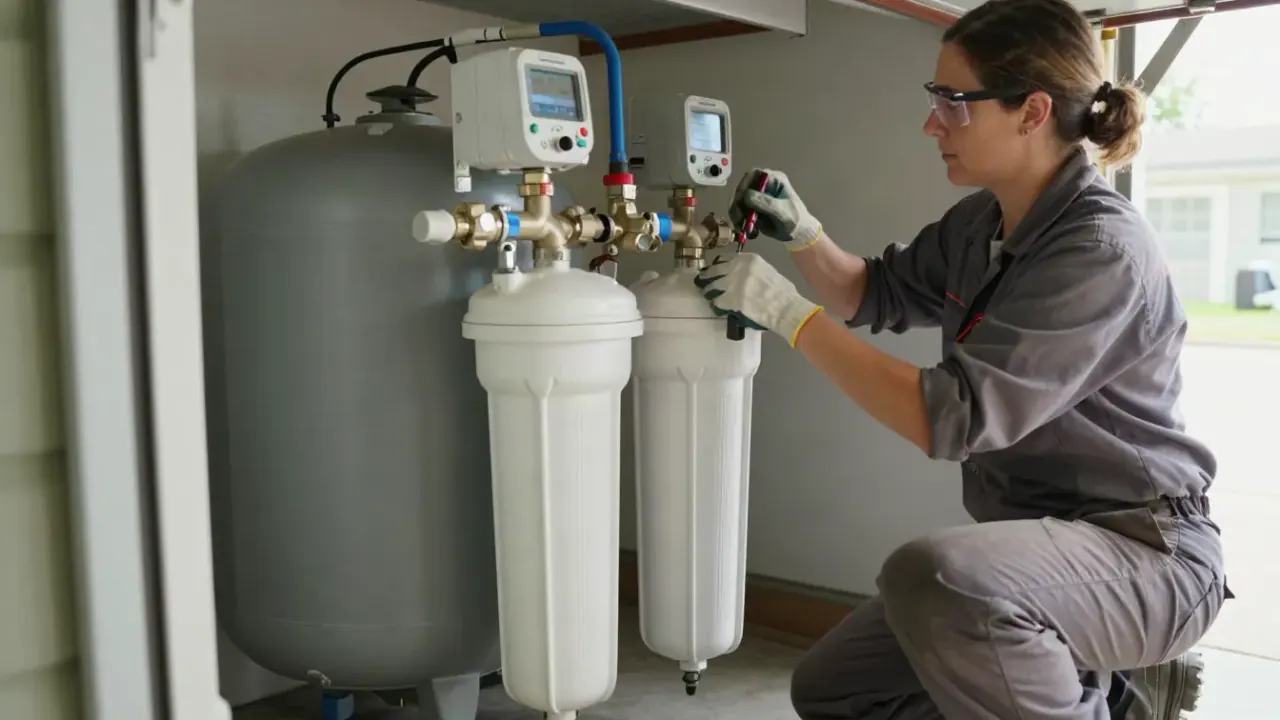
We set the new resin tank, install a fresh distributor tube, and load the correct volume of ion exchange resin for your hardness and household size. The control valve goes back on with new O-rings and a resin tank wrench to seat it properly. We reprogram regeneration days and salt dose to match the new bed.
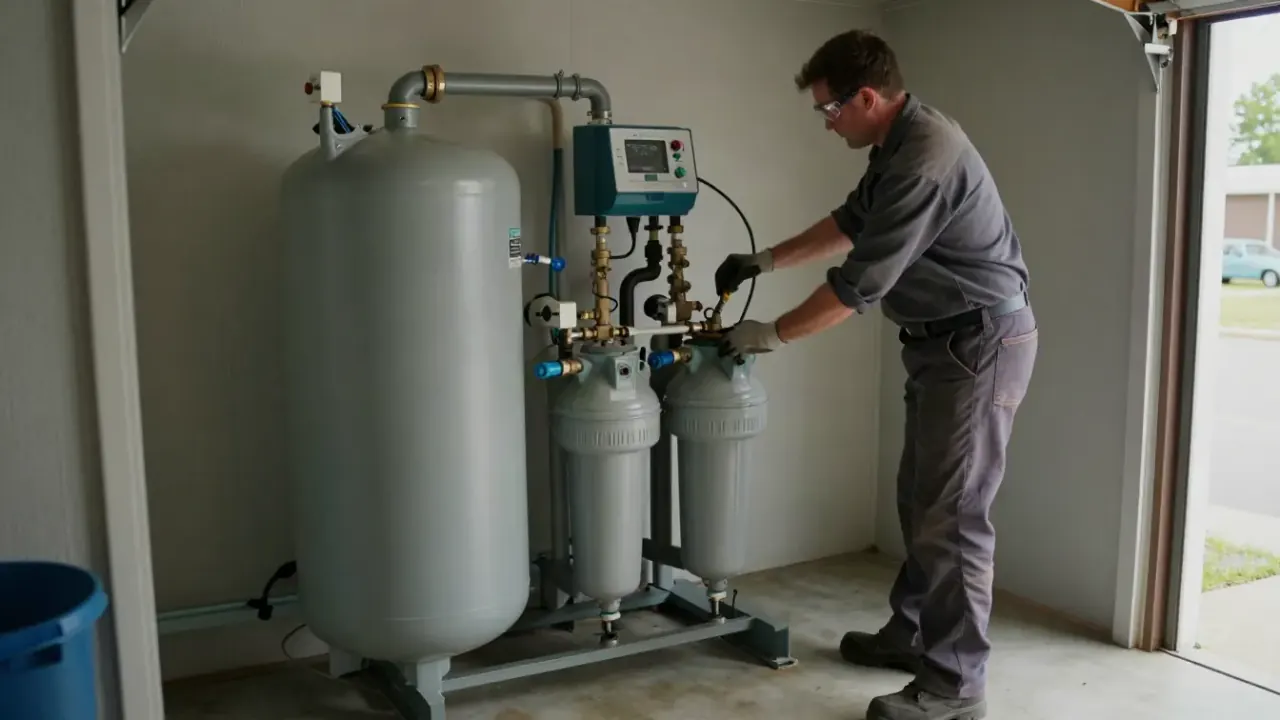
We run a full regeneration, check for leaks at every connection, and test hardness again at the tap. You get the before-and-after numbers. The old tank and spent resin leave with us, the area is wiped down, and we walk you through salt level and the next maintenance check.
Measures raw and treated hardness in grains per gallon so we can prove the resin is spent and confirm the fix before we leave.
Checks total dissolved solids at the tap to rule out other water quality issues and to size the new resin bed correctly.
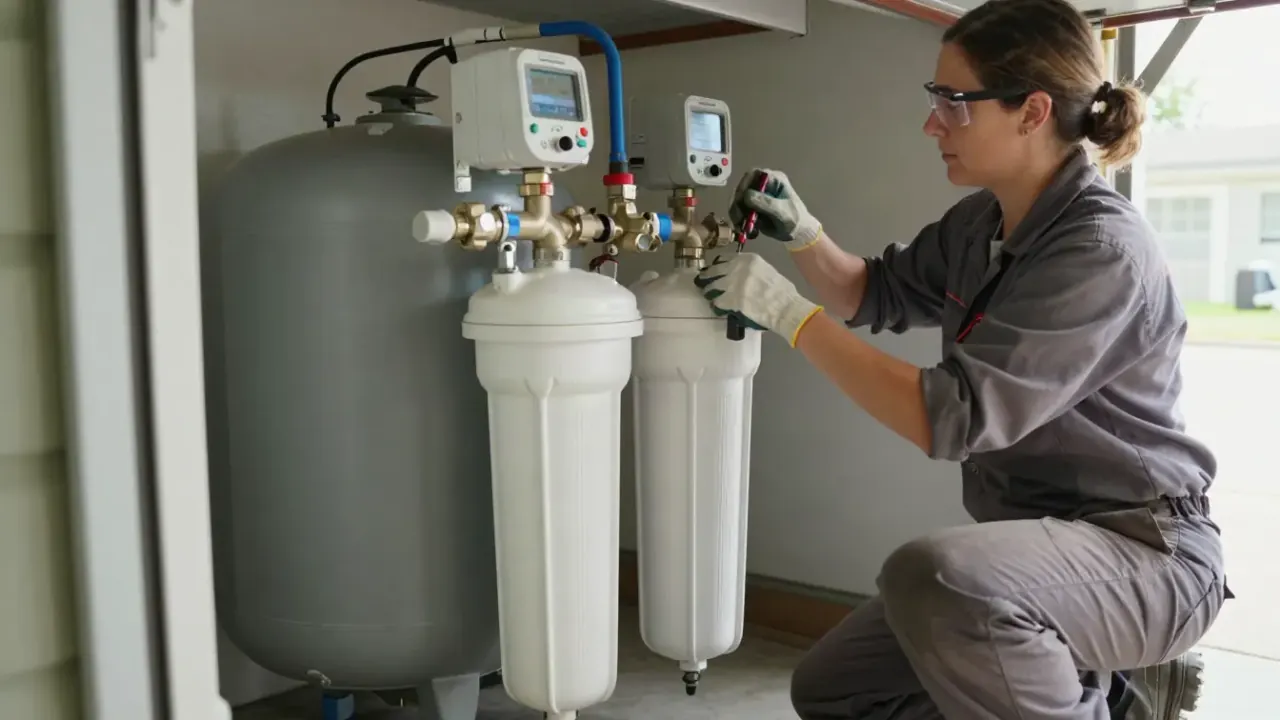
Seats and removes the control valve on the tank threads without cracking the fiberglass. The right tool prevents the most common install leak.
Pulls sludge, salt bridges, and standing brine out of the brine tank so the new resin regenerates against clean brine.
Used to isolate the unit at the bypass valve and make clean cuts on PEX or copper when the drain or supply lines need reworking.
For copper repairs at the bypass or drain connection when the existing fittings cannot be reused. Kept on the truck for older Diamond Bar homes with copper plumbing.
We install only resin that meets NSF/ANSI 44 and carries the WQA Gold Seal, so the media performs to the same standard as the original equipment and holds up to municipal chlorine.
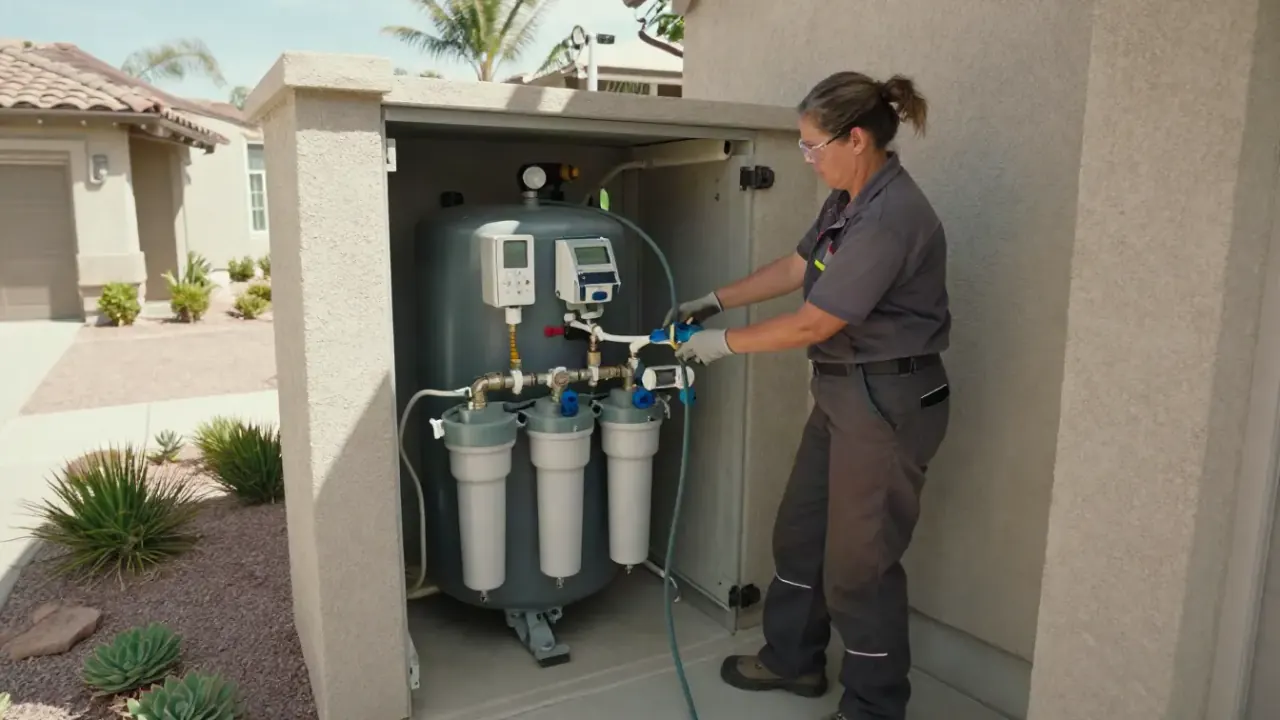
We calculate resin volume from your measured hardness, household size, and daily water use rather than copying the old tank. That is how a replacement delivers full capacity instead of running short.
We test hardness and TDS, confirm the tank is the weak point, and swap in a new resin tank sized to the home. We reprogram the control valve and clean the brine tank in the same visit. Soft water returns, salt use drops, and the unit is set up for another decade of service without a full system replacement.
We inspect the tank, valve, and brine tank, test the water, and tell you honestly whether you need a resin tank replacement or just maintenance. No guesswork and no pressure to replace what is still good. You know exactly what condition the softener is in and what it will cost to keep it running or replace it.
We coordinate access with the tenant, replace the resin tank, clean the brine tank, and test the water. The property manager gets the before-and-after numbers and a flat invoice. The tenant gets soft water back, and the owner avoids an emergency full-system replacement later.
We size a larger resin volume and, if needed, add carbon filtration ahead of the softener to protect the new resin from chlorine and organics. We set the control valve for the higher hardness. The softener keeps up with heavy demand, and the new resin lasts closer to its full rated life instead of failing early.
Diamond Bar water comes from a mix of local wells and imported supply, and hardness in Los Angeles County routinely lands between 10 and 18 grains per gallon. That is hard enough to wear resin out on the early side, which is why we see so many softeners in The Country, Stonegate, and Sycamore Canyon needing a water softener resin change Diamond Bar before the 15-year mark. Most homes here were built between the 1970s and 2000s, so the plumbing is a mix of copper and PEX, and the softener is often tucked in a garage corner or a side yard with tight clearance. We plan for that and bring the right fittings. If you are pricing water softener resin tank replacement cost Diamond Bar CA, remember that the tank, resin, labor, and haul-away are all part of the number, and a flat quote beats a low estimate that grows once the unit is open. We schedule around the heat, since garage temperatures push 100 degrees in late summer and we do not want new resin sitting in a hot truck any longer than necessary.
A Windwood homeowner was buying salt every three weeks and still seeing spots on glasses. Hardness at the tap tested 16 grains per gallon treated, which meant the resin was doing almost nothing. The brine tank had a two-inch salt bridge and the control valve was regenerating every other day.
We replaced the resin tank with a correctly sized bed, vacuumed the brine tank, and reprogrammed regeneration to every fourth day. Treated hardness dropped to under 1 grain per gallon, and salt use fell from a bag every three weeks to one every six weeks.
Top off salt monthly, keep the brine tank no more than two-thirds full, and test hardness once a year. We schedule an annual check to clean the brine tank and verify the valve timing.
A property manager called about a Stonegate rental where the tenant reported hard water and a softener that ran constantly. The unit was 11 years old, and resin beads were showing up in the brine tank, which pointed to a cracked distributor tube.
We replaced the tank, distributor tube, and resin in one visit, then tested the water twice. Treated hardness came back soft, the tenant stopped complaining, and the owner avoided a full system replacement that would have cost roughly twice as much.
We set the tenant up with a simple salt top-off routine and put the unit on an annual maintenance schedule so the next issue gets caught before it becomes a call-out.
A family in The Country tested at 19 grains per gallon and their 9-year-old softener could not keep up. Dishes were spotting, the water heater was scaling, and salt was disappearing fast. The original tank was undersized for the actual hardness.
We installed a larger resin tank with a bigger resin volume and added a carbon filter ahead of the softener to cut chlorine. Treated hardness now reads under 1 grain per gallon, and the family reports soap lathers with half the product.
Replace the carbon filter annually, keep the brine tank clean, and retest hardness each fall. With the larger bed, the resin should reach its full service life instead of failing early.
Hard water comes back slowly, so most people miss the early signs. These are the problems we hear on the phone every week in Diamond Bar.
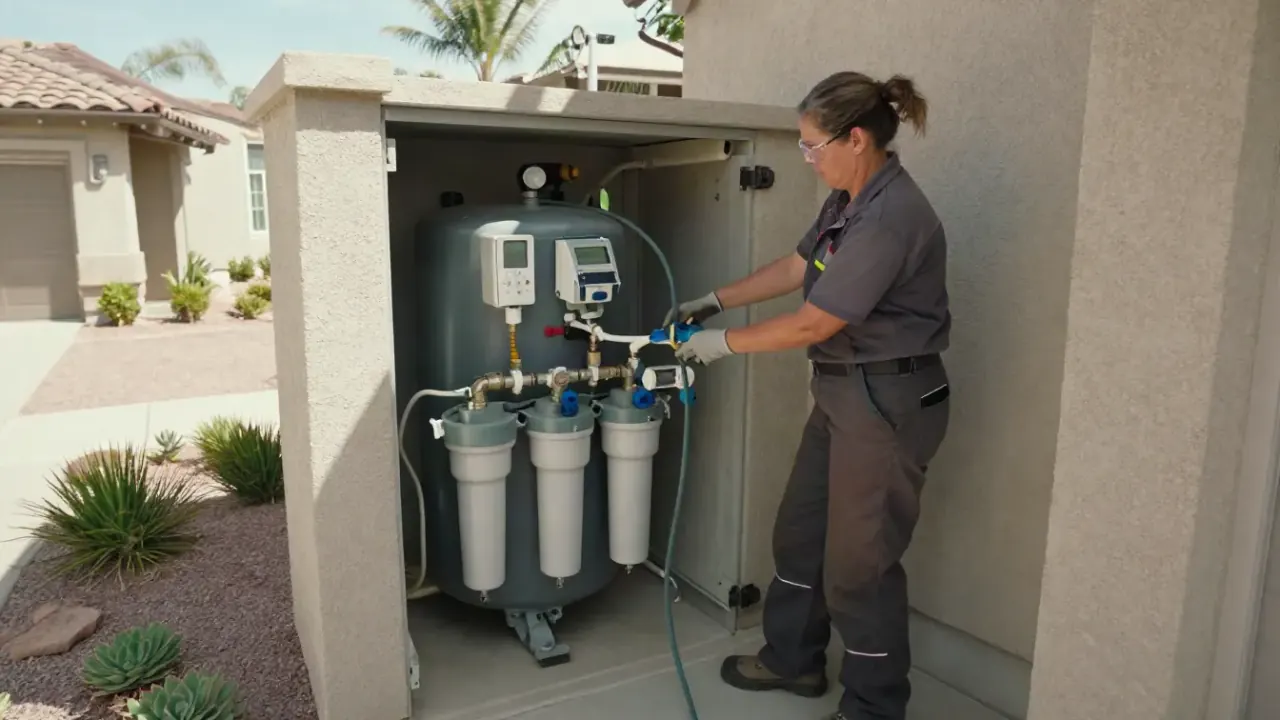
We test hardness at the tap to confirm the resin is spent, then replace the tank and media. After a full regeneration and a second test, the water reads soft again and the spotting stops within a few days of normal use. Spots mean the resin is no longer grabbing calcium and magnesium. Left alone, the same minerals build scale inside your water heater and pipes, cutting efficiency and eventually restricting flow.
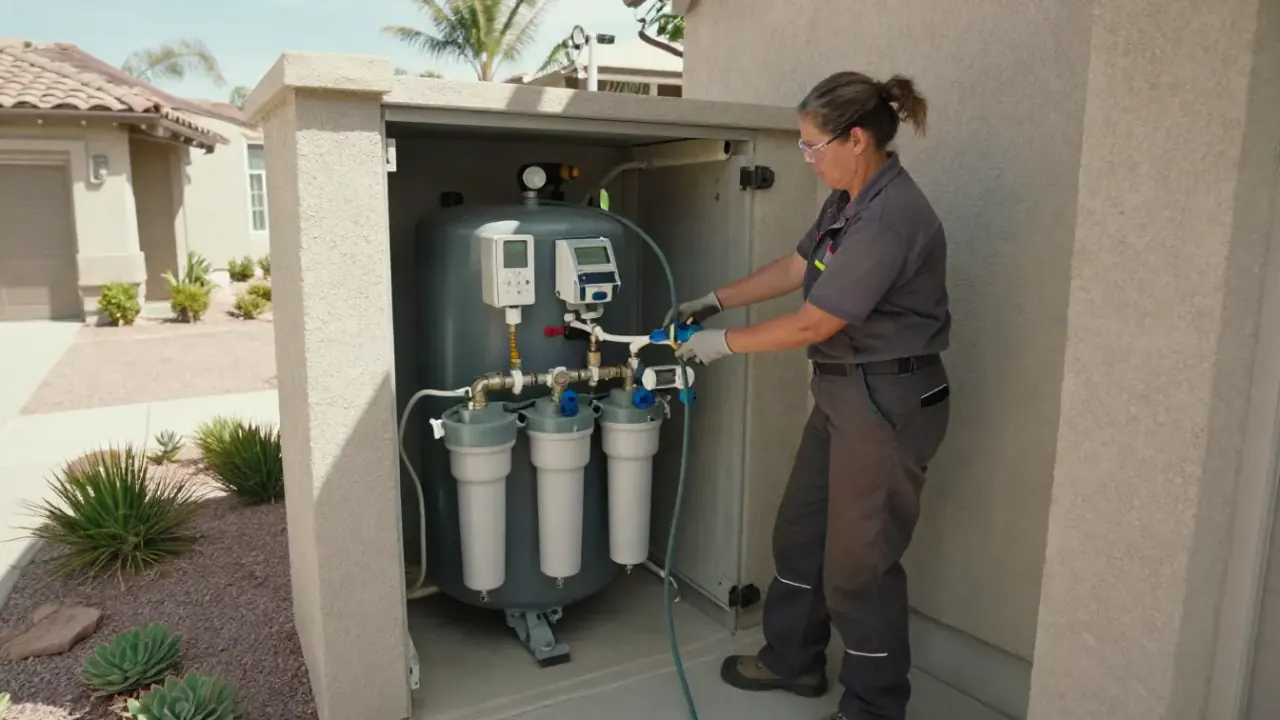
A correctly sized resin bed restores original capacity. We reprogram regeneration days and salt dose on your control valve, and most Diamond Bar families see salt use drop by a third or more within the first month. Exhausted resin forces more frequent regeneration, so you buy salt twice as often and send extra water down the drain. It is the most expensive way to run a softener.
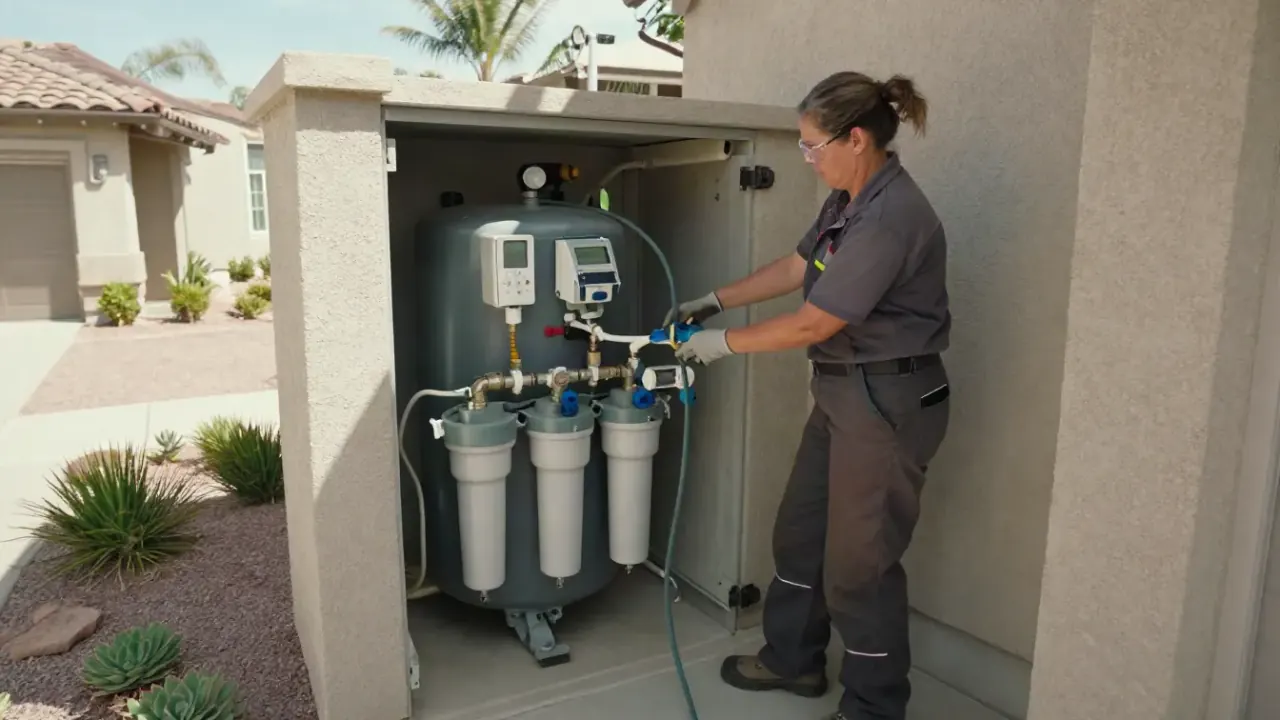
We vacuum the brine tank, clear the float and brine valve, and refill with clean salt. Combined with new resin, the unit regenerates properly again and the tank stays clean with normal salt top-offs. Sludge and bridges stop salt from dissolving, so regeneration runs with weak brine and the resin never fully recharges. The softener looks like it is working but the water stays hard.
We replace the tank, distributor tube, and resin together, which is the only reliable fix once media is escaping. We also check the drain line and control valve for damage before we button the job up. Beads escaping the tank usually mean a cracked distributor tube or a failed tank screen. Once resin volume drops, capacity falls with it and the softener cannot keep up.
New resin grabs calcium and magnesium immediately, so the first shower after the swap already feels different. Expect spots on glassware to drop sharply and soap to lather with less product. We verify the result with a hardness test at your kitchen tap before we pack up, and we show you the before-and-after numbers.
Depleted resin forces the control valve to regenerate more often, which burns salt and sends extra water down the drain. A correctly sized resin bed restores the original capacity, so a family of four in Diamond Bar often cuts salt use by a third. That is real money back on every bag of water softener salt you buy.
Scale buildup in pipes and water heaters is the expensive part of hard water. Once the resin is doing its job, the scale stops growing and existing deposits slowly release. Water heaters run more efficiently, and you stop replacing shower cartridges and faucet aerators every couple of years. That is the quiet return on a resin tank replacement.
When resin is exhausted, the softener over-regenerates and the brine tank turns into a thick sludge that bridges and stops dissolving salt. We vacuum and clean the brine tank as part of the visit, check the brine valve and float, and leave you with a tank that fills and drains the way it should. No more chiseling salt out with a shovel.
Typical 2026 pricing for a residential resin tank replacement in Diamond Bar runs $650 to $1,400, including the new tank, NSF/ANSI 44 resin, new O-rings, brine tank cleaning, and haul-away of the old vessel. Larger tanks, high-hardness homes, and commercial units go higher. If the control valve also needs a rebuild, that is quoted separately once we have it open. We give you a flat number before we start, so a water softener resin replacement service Diamond Bar customers can budget for is exactly what you pay.
What your estimate is based on
$650 - $1,400 for most residential jobs, higher for large or commercial units A resin tank replacement costs a fraction of a new softener and restores the capacity you already paid for. With salt savings and protected fixtures, most homeowners see the difference in the first few months.
Clear records you can keep and share.
Before and after numbers at your tap
One number covering parts and labor
Spent resin and vessel leave with us
The tank is just the pressure vessel. The resin inside is what actually removes hardness, and it is the part that wears out first.
Ion exchange beads crack and foul over years of service. Once capacity drops, the softener runs but the water stays hard. Testing at the tap is the only way to know for sure.
Fiberglass vessels can fail at the threads or the base, especially after 12 years. A cracked tank leaks or lets resin escape into the brine tank, and both mean replacement.
A bad control valve mimics dead resin by bypassing water or skipping regeneration. We check the valve before quoting a tank, so you do not replace the wrong part.
Outside these areas? Call and ask about your street. (909) 415-2296
Most residential resin tank replacements in Diamond Bar run $650 to $1,400 in 2026, including the new tank, resin, labor, and haul-away. Larger tanks for high-hardness homes or commercial units go higher. The biggest cost drivers are tank size, resin volume, and whether the control valve needs a rebuild at the same time. We quote flat before we start.
Plan on 10 to 15 years for standard resin, or 7 to 10 years if your water tests above 15 grains per gallon. Diamond Bar water often lands in that harder range, so we see plenty of resin failing on the early side. Chlorine in municipal supply also shortens resin life. Annual hardness testing tells you when capacity starts slipping.
The classic signs are hard water spots returning, soap that will not lather, high salt usage, and a softener that runs through a regeneration without changing the feel of the water. You may also see resin beads in the brine tank or a tank that will not hold pressure. A hardness test at the tap confirms it in minutes.
Sometimes, yes. If the fiberglass vessel is sound and the distributor tube is intact, we can cut the old resin out and reload the tank. But once a tank is 12 or more years old, the threads and base are usually close to failing, and a new tank costs little more than the labor to reuse the old one. We inspect and tell you which makes sense.
Soft water is one phone call away. We test, quote flat, and swap the tank in a single visit, with the old resin hauled off when we leave. Call (909) 415-2296 and we will get you on the schedule.
Call (909) 415-2296 or email us and we will get back to you the same business day. We answer questions about hardness readings, salt use, and system sizing before you book anything. Serving Diamond Bar and Los Angeles County.