Local GuidesRepair Tips
How Hard Water Damages Appliances and Fixtures
Hard water coats heating elements and valves with scale, cutting appliance life by years. Here's what's happening inside your Diamond Bar home and how to stop it.
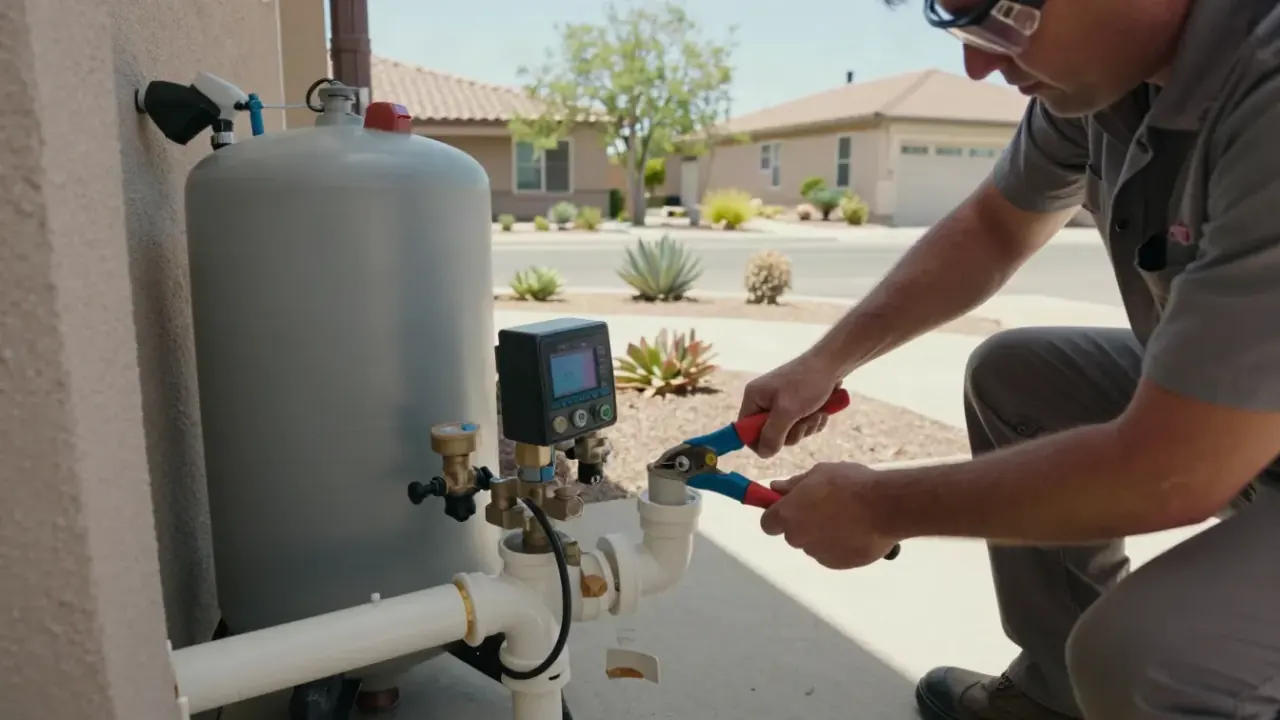
Hard water damages appliances and fixtures by depositing calcium carbonate scale on every surface it touches - heating elements, valve seats, spray arms, and faucet aerators - which forces motors and burners to work harder until they fail early. In Diamond Bar, where water runs 12 to 18 grains per gallon, that damage starts the day you move in. A water heater that should last 12 years often quits at 7. A washing machine that should run 11 years grinds to a halt at 6. We see it in every neighborhood we service. This post walks through exactly what scale does to each appliance, what it costs to fix in 2026, and how to stop the cycle before your next major replacement.
What Hard Water Actually Does Inside Your Plumbing
Hard water scale damage is a mineral deposition problem, not a corrosion problem. Calcium and magnesium dissolved in your water precipitate out as solid crystals whenever water is heated, pressurized, or left to evaporate. Those crystals bond to metal, rubber, and plastic surfaces and build up in layers. A pipe that starts at 3/4-inch inside diameter can drop to 1/2-inch in five years. A heating element that starts smooth develops a crust that acts like insulation - the element runs hotter, draws more current, and burns out. Hard water effects on plumbing show up first as reduced flow, then as pressure loss, then as leaks at joints where scale has pushed fittings apart. By the time you notice a problem, the damage is usually advanced.
How Hard Water Destroys Your Water Heater
Your water heater is the first appliance hard water kills because it heats the same water over and over. Every degree of temperature increase accelerates scale formation. At 140°F, scale deposits form roughly twice as fast as at 120°F. Inside a tank-style heater, that scale settles to the bottom and forms a crust over the burner or element. You hear popping and rumbling - that's water trapped under the scale flashing to steam. The burner runs longer to reach the set temperature, your gas bill climbs 10 to 15 percent, and the tank eventually fails from overheating the steel shell. Tankless units clog even faster because the heat exchanger passages are narrow. A tankless heater in Diamond Bar without softened water typically needs descaling every 6 to 9 months. With soft water, once a year is enough. A tank water heater replacement runs $1,200 to $2,400 in 2026; a tankless descale and service runs $200 to $350. The math favors prevention every time.
Washing Machine and Dishwasher Damage
The hard water effect on a washing machine in Diamond Bar shows up as stiff, gray laundry long before the machine quits. Scale coats the drum, the inlet valve, and the pump impeller. Detergent can't dissolve properly in hard water, so you use more of it, and the soap scum binds with minerals to form a sticky film inside the tub. Front-loaders are worse because the pump has tighter tolerances. We've pulled pumps clogged solid with a calcium-and-lint paste that looked like concrete. The inlet valve - a $25 part - fails when scale builds on the solenoid seat and it can't close fully, which floods the floor. A repair call runs $180 to $320. A new machine runs $700 to $1,400. A dishwasher suffers the same fate: the spray arms plug, the heating element scales over, and dishes come out spotted and gritty. The circulation pump is the first casualty, usually at year 5 or 6 instead of year 10.
Fixtures, Faucets, and Showerheads
Hard water scale buildup on fixtures in California is visible within weeks. That white crust on your showerhead is scale. It narrows the nozzles, drops your shower pressure, and eventually blocks half the holes. Faucet aerators plug the same way - a 30-second unscrew and rinse buys you a few months, but the scale returns. Toilet fill valves and flappers degrade faster because scale roughens the rubber sealing surface, causing the toilet to run intermittently and waste 200 gallons a day. Behind the wall, the damage is worse. Scale accumulates on the hot-water side of every copper line and pushes joint fittings until they weep. A pinhole leak in a slab line can cost $2,500 to $8,000 to locate and repair. New showerheads and faucets are cheap; repiping a house is not.
Why Diamond Bar Water Is So Hard
Diamond Bar sits on the eastern edge of the San Gabriel Valley, and most of our water arrives from the Metropolitan Water District's Colorado River and State Water Project supplies. Both sources pick up calcium and magnesium as they travel through limestone and mineral-rich soil. By the time that water reaches your meter, it typically tests 12 to 18 grains per gallon - firmly in the "very hard" range on the standard scale. For context, water above 10.5 grains is considered very hard. We're well past that. The problem is worse in hillside neighborhoods where water sits longer in the lines and in older homes with galvanized pipes that have already accumulated decades of scale. If you've ever wondered why your neighbor's water heater lasted 14 years and yours died at 8, the answer is usually whether they had a softener. If you want to know your exact numbers, we offer Water Hardness Testing Diamond Bar CA on-site and can tell you in about 15 minutes.
What to Watch Out For
Most homeowners miss the early warning signs because scale damage is gradual. Here's what we tell customers to watch for:
- Popping or rumbling from the water heater - scale on the bottom of the tank trapping water against the burner.
- Dishes with white film after washing - the dishwasher's heating element is scaling over and can't dry properly.
- Laundry that feels stiff or scratchy - detergent isn't dissolving, and soap scum is bonding to fabric.
- Reduced water pressure at every faucet - aerators and supply lines are plugging with scale.
- Toilet running intermittently - the fill valve or flapper has a rough, scaled sealing surface.
- Higher gas or electric bills without a rate change - your water heater is running longer to hit the same temperature.
One of these alone is a nuisance. Three or more means you're on the fast track to a major replacement. The most common mistake we see is homeowners replacing the failed appliance without addressing the water. A new water heater installed into hard water will fail on the same schedule as the old one. Fix the water first, then replace the appliance. If you're already dealing with a failed unit, we handle Water Softener Repair Diamond Bar CA and can usually get you back online the same day.
When to Call a Professional
You can descale a showerhead with vinegar and replace an aerator yourself. But once scale has reached the water heater, the washing machine pump, or the copper lines behind your walls, DIY fixes don't work. We find the source, test your water, and tell you exactly what's failing and why. If you're in one of the hillside neighborhoods like Water Softener in Sycamore Canyon or down in the flats near Water Softener in Diamond Point, we know the water profiles in your area and can recommend the right system size. Our team installs and services whole-house softeners, salt-free conditioners, and filtration systems across Diamond Bar. We give you a straight answer on whether your existing equipment can be saved or needs replacement. No pressure, no upsell. If you're not sure whether you need a softener or a filter, start with a water test and we'll walk you through the results in plain language.
Frequently Asked Questions
How does hard water damage appliances in Diamond Bar CA?
Hard water in Diamond Bar runs 12 to 18 grains per gallon, which deposits calcium scale on heating elements, valves, and pumps. That scale forces appliances to run hotter and longer, cutting water heater life from 12 years to 7 and washing machine life from 11 years to 6.
Can hard water ruin my water heater in California?
Yes. Scale builds on the burner or element, causing overheating, popping sounds, and higher gas bills. A tank heater in hard water typically fails in 6 to 8 years instead of 12. Annual flushing helps, but softened water is the real fix.
How to prevent hard water damage in Diamond Bar?
Install a whole-house water softener or salt-free conditioner at the main line. That stops scale before it reaches any appliance. Pair it with annual water heater flushing and you'll get full expected life from every unit in the house.
Does a water softener really extend appliance life?
Yes, measurably. Softened water eliminates the scale that kills heating elements and pumps. We routinely see water heaters reach 12 to 15 years and washing machines hit 10 to 12 years in homes with softeners, versus 6 to 8 without.
How much does hard water damage cost me each year?
Between premature appliance replacement, higher energy bills, extra detergent, and plumbing repairs, hard water costs the average Diamond Bar household $800 to $1,500 per year. A softener typically pays for itself in 2 to 3 years.
Get Help with Water Softener in Diamond Bar
If your appliances are failing early and your fixtures are crusted with white scale, the water is the problem - and it's fixable. We test your water, size the right system for your home, and install it so every appliance downstream is protected. Call Diamond Bar Water Softener at (909) 415-2296 to schedule your water test and get a straight answer on what your home needs.