Local GuidesWater Quality
Hard Water Spots on Glass and Dishes: What Helps
Those cloudy white spots on your glasses and plates are calcium and magnesium left behind by Diamond Bar's hard water. Here's what removes them and what stops them.
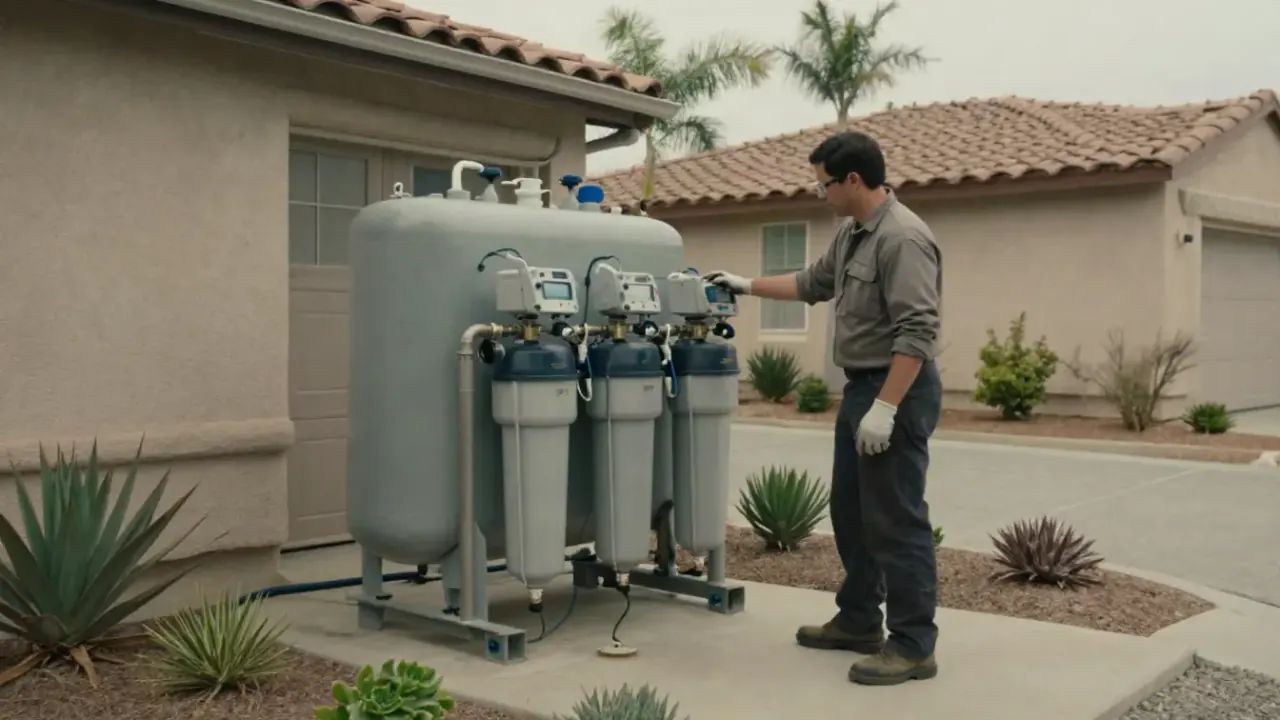
The fastest fix for hard water spots on glass and dishes is a 50/50 white vinegar and water soak followed by a rinse in softened or bottled water - but that only removes the spots you already have. The permanent fix is stopping the dissolved calcium and magnesium from drying onto your glassware in the first place, which is what a properly sized water softener does. Below we cover what causes the spots, how to remove hard water spots from glass without scratching it, and why Diamond Bar homes see this problem more than most of Southern California.
What Actually Causes Hard Water Spots on Glass and Dishes?
Hard water spots on glass and dishes are mineral deposits - mostly calcium carbonate and magnesium - left behind when water evaporates and the dissolved minerals stay put. The water itself is clear. The problem only appears after the last rinse dries.
Here is the sequence. Your dishwasher's final rinse leaves a thin film of water on every surface. As that film evaporates, the calcium and magnesium that were dissolved in it can't evaporate with the water, so they precipitate out and bond to the glass. One cycle leaves a faint haze. Fifty cycles leave the cloudy, etched-looking film most Diamond Bar homeowners are staring at right now.
Water hardness is measured in grains per gallon, or gpg. Anything above 7 gpg is considered hard. Diamond Bar's municipal supply, which comes largely from the Metropolitan Water District's Colorado River and State Water Project blends, typically runs 10 to 18 gpg depending on the year and the blend ratio. That's squarely in the "very hard" range, and it's why a glass that looks clean coming out of the dishwasher can look chalky an hour later.
There's a second cause people miss: the drying cycle. Heat accelerates mineral bonding. If you're running a heated dry on a dishwasher with no rinse aid, you're essentially baking the calcium onto the glass.
Why Diamond Bar Water Spots Faster Than You Expect
Diamond Bar sits in a stretch of the San Gabriel Valley where the imported water blend swings harder than coastal cities, and that swing shows up on your glassware. Two things drive it.
First, evaporation. Inland temperatures here push past 95°F most summers, and water evaporates faster on a warm countertop than on a cool one. Faster evaporation means minerals concentrate more aggressively before the surface is dry.
Second, plumbing age. A large share of Diamond Bar's housing stock went up between the late 1970s and the 1990s, and many of those homes still run original copper with no whole-house treatment. We see the same pattern across neighborhoods like Water Softener in Diamond Point, where 1980s builds and hard imported water combine to leave spots on every glass in the cabinet within a week of washing.
If you want to know exactly what you're dealing with, a Water Hardness Testing Diamond Bar CA visit gives you a gpg number for your specific tap - not a citywide average. That number determines what size softener your house actually needs.
How to Remove Hard Water Spots From Glass
Removing hard water spots from glass comes down to dissolving the mineral bond without abrading the surface. Start mild and escalate only if you have to.
- White vinegar soak. Mix equal parts white vinegar and water in a basin. Submerge glasses for 15 to 30 minutes. The acetic acid dissolves calcium carbonate. Rinse in softened or bottled water and hand-dry with a microfiber cloth.
- Citric acid paste. For heavier spotting, mix two tablespoons of citric acid powder with a little warm water into a paste. Rub it on with your fingers, let it sit 5 minutes, rinse thoroughly.
- Baking soda slurry. One-quarter cup baking soda plus enough water to make a paste. Apply with a soft cloth, work in circles, rinse. Good for the outside of glassware and for drinking glasses with stubborn rings.
- Commercial hard water spot remover. Products built around sulfamic or phosphoric acid work fast, but read the label - many are not safe for leaded crystal or for anything with a painted rim.
One warning that matters more than any of the above: never use steel wool, abrasive scouring pads, or powdered cleansers on glassware. They scratch the surface, and a scratched glass collects minerals faster on the next wash. You'll trade a spot for a permanent etch.
For shower doors, glass tables, and windows, the same vinegar approach works, but you'll want to spray, let it dwell 10 minutes, then squeegee rather than wipe. Wiping just moves the dissolved minerals around.
Hard Water Stains on Dishes: What Works and What Doesn't
Hard water stains on dishes behave differently than on glass because most dinnerware has a glaze that minerals bond to less aggressively - but flatware and matte-finish stoneware are a different story.
What works on dishes:
- A vinegar rinse cycle in the dishwasher (one cup of white vinegar in a top-rack bowl, run a normal cycle with no detergent).
- Rinse aid. This is the single highest-return change most people can make. Rinse aid changes the surface tension of the final rinse water so it sheets off instead of beading, which means fewer drying droplets and fewer spots.
- Hand-drying instead of air-drying. A towel removes the water before it can evaporate and leave minerals behind.
What doesn't work: running the same load twice, adding more detergent, or switching dishwasher brands. None of those change the mineral content of the water. If your water is 14 gpg, it's 14 gpg no matter what's in the detergent cup.
Flatware is worth a separate mention. Silver and stainless both pit and discolor faster in hard water, and once the surface is etched, no amount of vinegar brings it back. That's a replacement cost, not a cleaning cost.
Does a Water Softener Help With Hard Water Spots in Diamond Bar?
Yes - a water softener is the only fix that removes the calcium and magnesium from the water before it ever reaches your dishwasher, so there are no minerals left to dry onto the glass. Cleaning removes the symptom. Softening removes the cause.
Here's how it works. A softener runs your incoming water through a resin tank charged with sodium ions. Calcium and magnesium bind to the resin, and sodium takes their place in the water. Softened water has effectively 0 gpg hardness. When the final rinse dries, there's nothing left to spot.
What we see in practice, after a Water Softener Installation Diamond Bar CA on a typical 3-bathroom home:
- Spotting on glassware drops off within the first two or three dishwasher cycles.
- Existing haze on older glasses fades over a few weeks as the softened water slowly re-dissolves the surface film.
- Soap and detergent use drops noticeably - soft water lathers with roughly half the product.
- Water heater scale buildup slows, which matters because scale is what shortens tank life.
Typical 2026 pricing for a properly sized softener installed in a Diamond Bar home runs $1,800 to $3,500 depending on system size, whether you need a bypass and drain line run, and whether you pair it with filtration. A standalone Salt-Free Water Conditioners Diamond Bar CA unit is a different animal - it conditions water to reduce scale adhesion but does not remove hardness, so it will not eliminate spotting the way a true softener does. If spots are your main complaint, you want ion exchange, not conditioning.
One more thing worth knowing: if you already have a softener and the spots came back, the resin is often the culprit. Resin beads have a service life of roughly 10 to 15 years, and once they're exhausted they stop grabbing calcium. A Resin Tank Replacement Diamond Bar CA restores full hardness removal for a fraction of the cost of a new system.
Common Mistakes That Make Hard Water Spots Worse
Most of the calls we get about spotting involve one of these five mistakes, and every one of them is avoidable.
- Skipping rinse aid. It's a $6 bottle that does more for spotting than any detergent upgrade. Use it.
- Air-drying everything. Letting dishes sit in the rack to dry gives minerals maximum time to bond. Towel-dry glassware.
- Using abrasive pads. Scratched glass spots worse on every subsequent wash. Once it's etched, it's etched.
- Oversizing or undersizing the softener. A unit sized for a 2-person condo will be exhausted by a 5-person household with a pool fill and irrigation. Undersized softeners regenerate constantly and still let hardness through.
- Ignoring the brine tank. Salt bridges and mushy salt beds stop regeneration without any warning light. If your softener is running but spots are back, check the brine tank first. A Brine Tank Cleaning Diamond Bar CA visit fixes most of these in under an hour.
There's also a seasonal trap. Every fall, Diamond Bar's imported water blend shifts as the district adjusts its source mix, and hardness can jump 2 to 4 gpg without any change on your end. Homeowners who tested in spring and set their softener accordingly sometimes see spots return in October. It's worth re-testing annually.
When to Call a Professional
Call us when the spots keep coming back after you've cleaned the glass, added rinse aid, and confirmed your softener is actually regenerating. At that point the problem is upstream of your dishwasher, and no cleaning product will fix it.
We handle the whole chain: hardness testing at your tap, sizing the system to your household, installation, and ongoing service. If you're in one of the older tracts around Water Softener in Cimarron Oaks or anywhere else in Diamond Bar, we can usually tell you within 20 minutes of testing whether you need a new system, a repair, or just a maintenance visit. We also handle Water Softener Maintenance Diamond Bar CA on systems we didn't install - annual service runs $150 to $250 in 2026 and includes resin inspection, brine tank cleaning, and a hardness check at the tap.
We quote the price before we start, and we don't sell a softener to someone who only needs a $40 valve rebuild.
Frequently Asked Questions
How do I remove hard water spots from glass in Diamond Bar CA?
Soak the glass in a 50/50 white vinegar and water solution for 15 to 30 minutes, then rinse with softened or bottled water and hand-dry with microfiber. For heavy spotting, use a citric acid paste. Avoid abrasive pads - they etch the glass permanently and make future spotting worse.
What causes hard water spots on dishes in California?
Dissolved calcium and magnesium left behind when rinse water evaporates. Diamond Bar's imported water typically runs 10 to 18 gpg, well into the hard range. The minerals don't evaporate with the water, so they bond to the dish surface as it dries. Heated drying cycles accelerate the bonding.
Does a water softener help with hard water spots in Diamond Bar?
Yes. A softener removes calcium and magnesium through ion exchange before the water reaches your dishwasher, so there are no minerals left to spot. Most Diamond Bar homeowners see spotting drop off within two to three dishwasher cycles after installation. Salt-free conditioners reduce scale but do not eliminate spotting.
How much does a water softener cost in Diamond Bar in 2026?
Installed pricing for a properly sized system typically runs $1,800 to $3,500, depending on household size, plumbing layout, and whether you add filtration. Annual maintenance runs $150 to $250. Resin tank replacement, when the resin is exhausted, costs considerably less than a full new system.
Can I just use a hard water spot remover for glass in Diamond Bar instead of a softener?
You can, and it works - on the spots you already have. It does nothing about the next load. Commercial removers built on sulfamic or phosphoric acid are effective but many aren't safe for crystal or painted rims. Cleaning treats the symptom; softening prevents it.
Get Help With Water Softener in Diamond Bar
If your glasses are cloudy no matter how many times you run them through, the water is the problem - and we fix water. Diamond Bar Water Softener installs, repairs, and maintains systems across Diamond Bar and the surrounding San Gabriel Valley, and we test your tap before we recommend anything.
Call (909) 415-2296 to schedule a hardness test and get a straight answer on what your home actually needs.